Lubberhuizen spirits are available for direct purchase through Pasteuning‘s online shop. The distillery also maintains relationships with select restaurants and specialty wine merchants throughout the Netherlands.
Visitors can connect with the distillery and its activities through Instagram, Facebook, or LinkedIn.
A Living Heritage of Dutch Eau-de-Vie
Lubberhuizen Distillery—originally founded in 2003 as Lubberhuizen & Raaff—stands as the oldest craft distillery in the Netherlands dedicated exclusively to eaux-de-vie production.
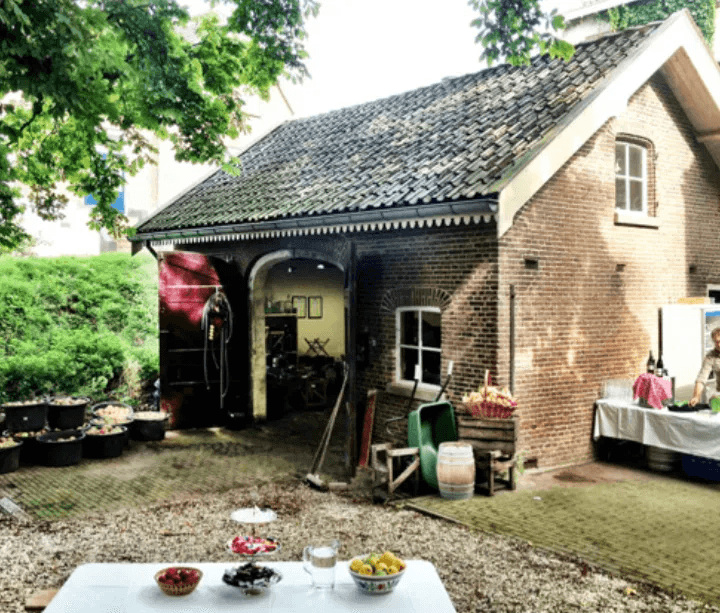
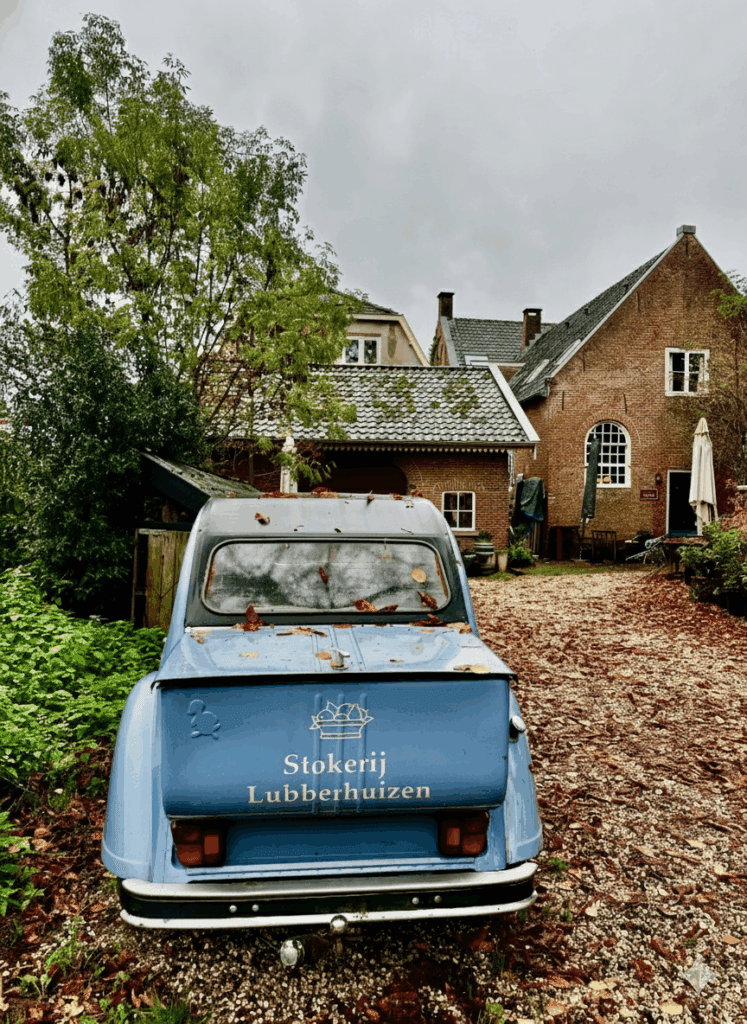
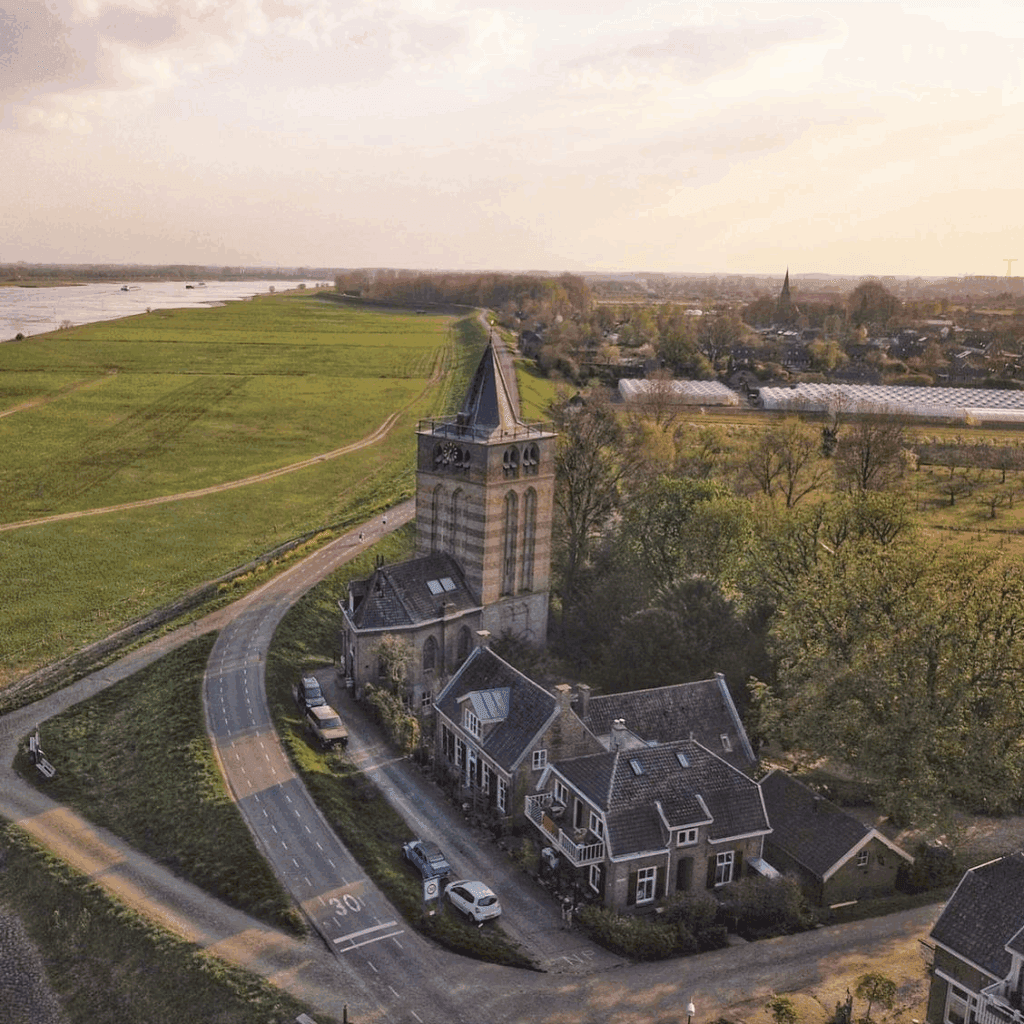
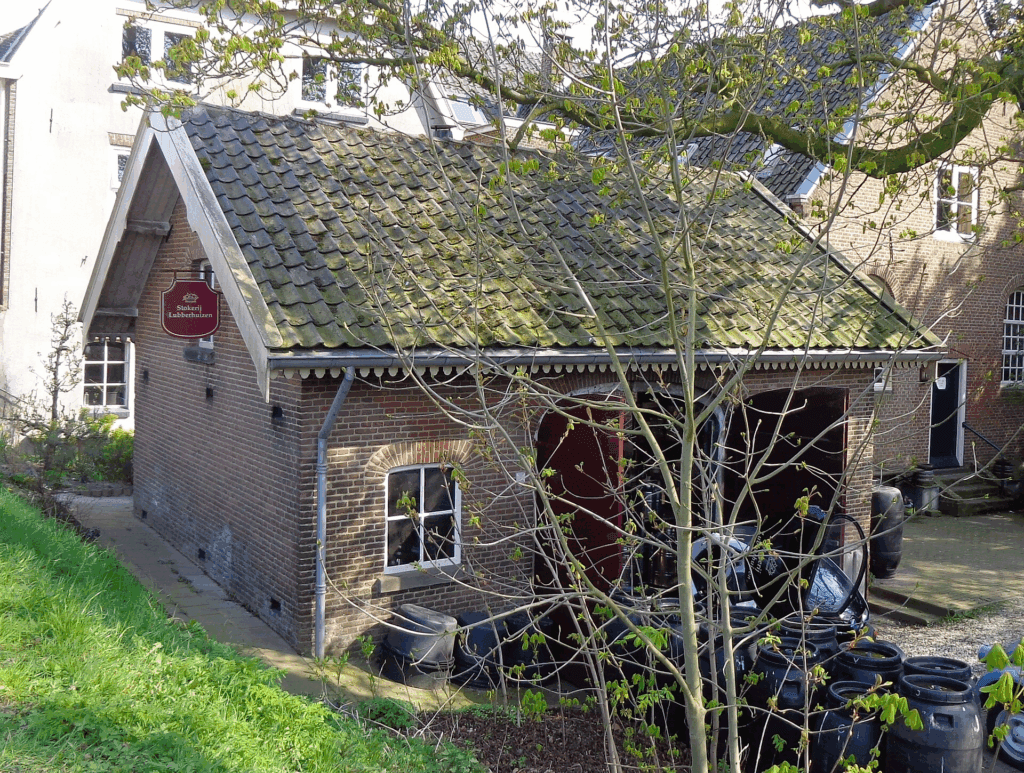
Nestled in Varik, a village on the river Waal in the fruit-rich Betuwe region, the distillery occupies two historic buildings: a parish clerk house and schoolhouse (circa 1841, a national monument) and a former fire engine house (1885). This location, known for its extensive orchards, provides the ideal terroir for crafting exceptional fruit spirits.
Preserving Tradition Through Craft
Lubberhuizen plays a central role in preserving the Dutch eau-de-vie tradition, producing spirits that are fully artisanal—distilled by hand from fermented fruit mash, rather than blending industrial alcohol with flavorings.
- Genootschap der Warme Stokers: As a founding member of this Society of Warm Distillers, Lubberhuizen adheres to a commitment to small-scale, natural fruit distillation using traditional copper kettles.
- Slow Food Presidium: The distillery participates in the Slow Food Presidium for Dutch Eau de Vie, which recognizes traditional methods that might otherwise disappear. This requires members to produce a maximum of 5,000 bottles annually using traditional distillation with natural, local fruit varieties, including those from the Ark of Taste like Notarisappel, Kroos, Morel and Varikse Zwarte.
Through these initiatives, Lubberhuizen demonstrates how regional fruit, authenticity, and craftsmanship define the identity of Dutch levenswater (aqua vitae, “water of life”).
International Recognition
The distillery sources fruit locally from small orchards and private gardens throughout the Betuwe, resulting in highly acclaimed products:
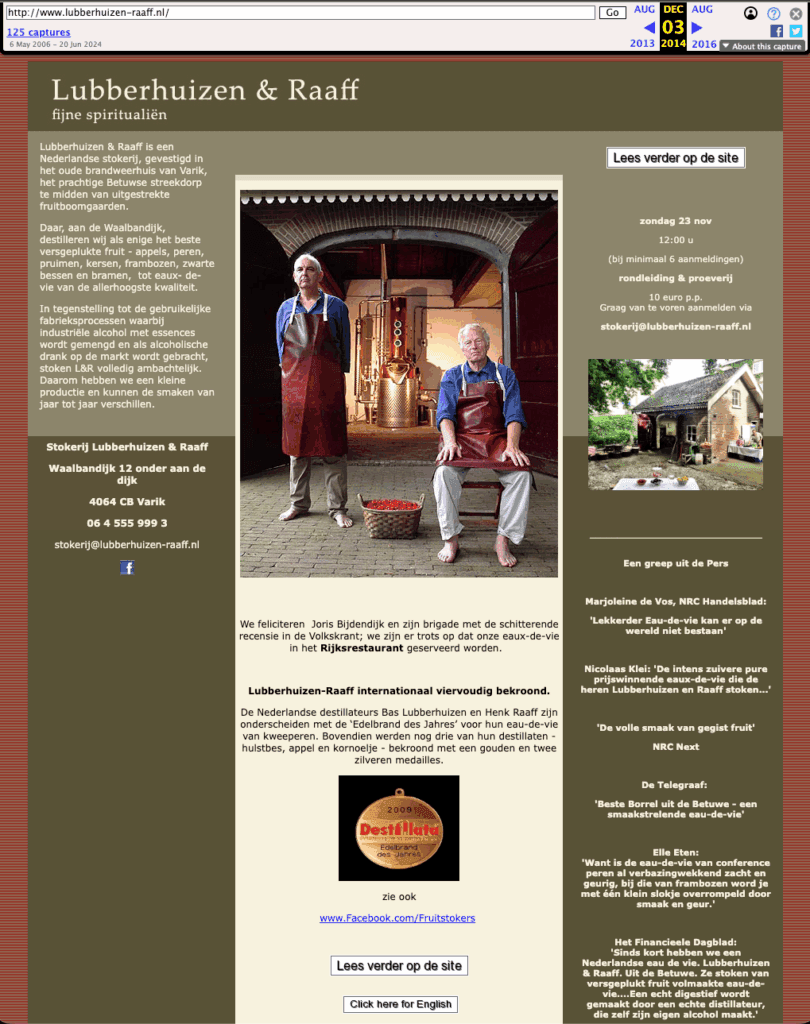
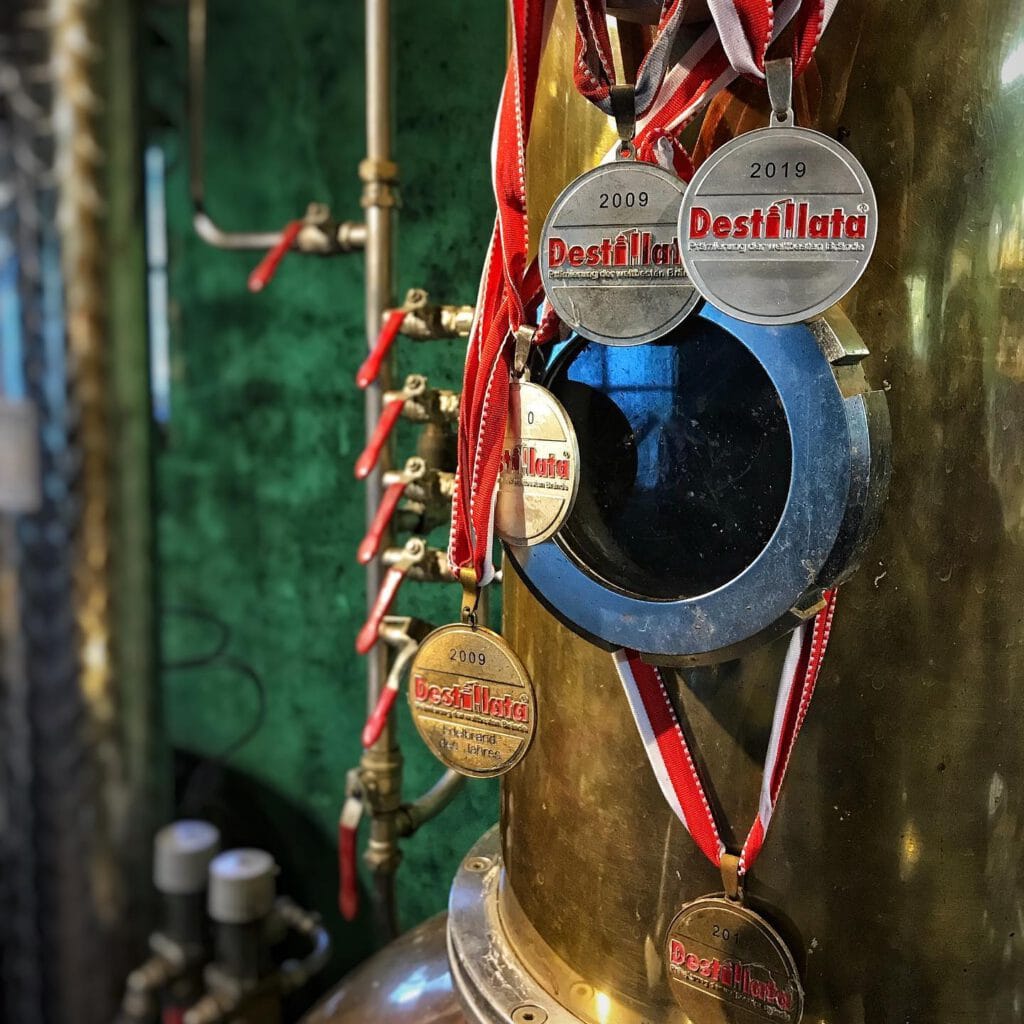
- Quince: Lubberhuizen became the first Dutch distillery to receive the prestigious Edelbrand des Jahres (Eau-de-Vie of the Year) award at Destillata, Austria’s spirits competition, in 2009 for their highly challenging quince distillate.
- Holly Berry: Additional recognition includes a silver medal at Destillata 2019 for their holly berry eau-de-vie.
The Collections
Lubberhuizen offers four distinct product lines, all showcasing the rich terroir of the Betuwe.
The Classic Collection (Klassiekers)
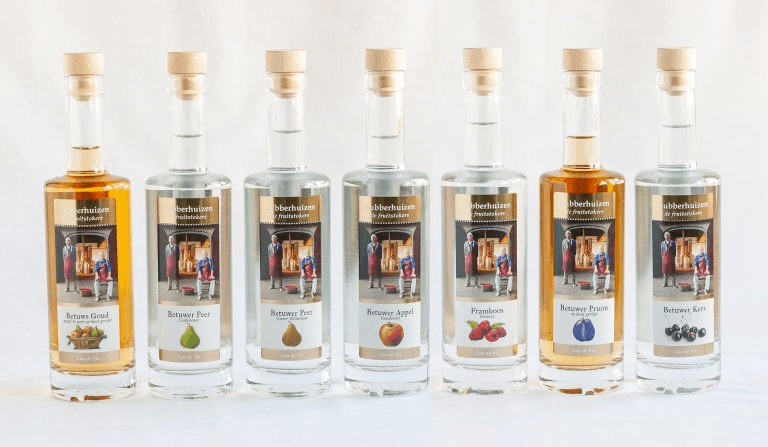
Presented in 35cl bottles, this range showcases the Betuwe’s traditional fruit heritage:
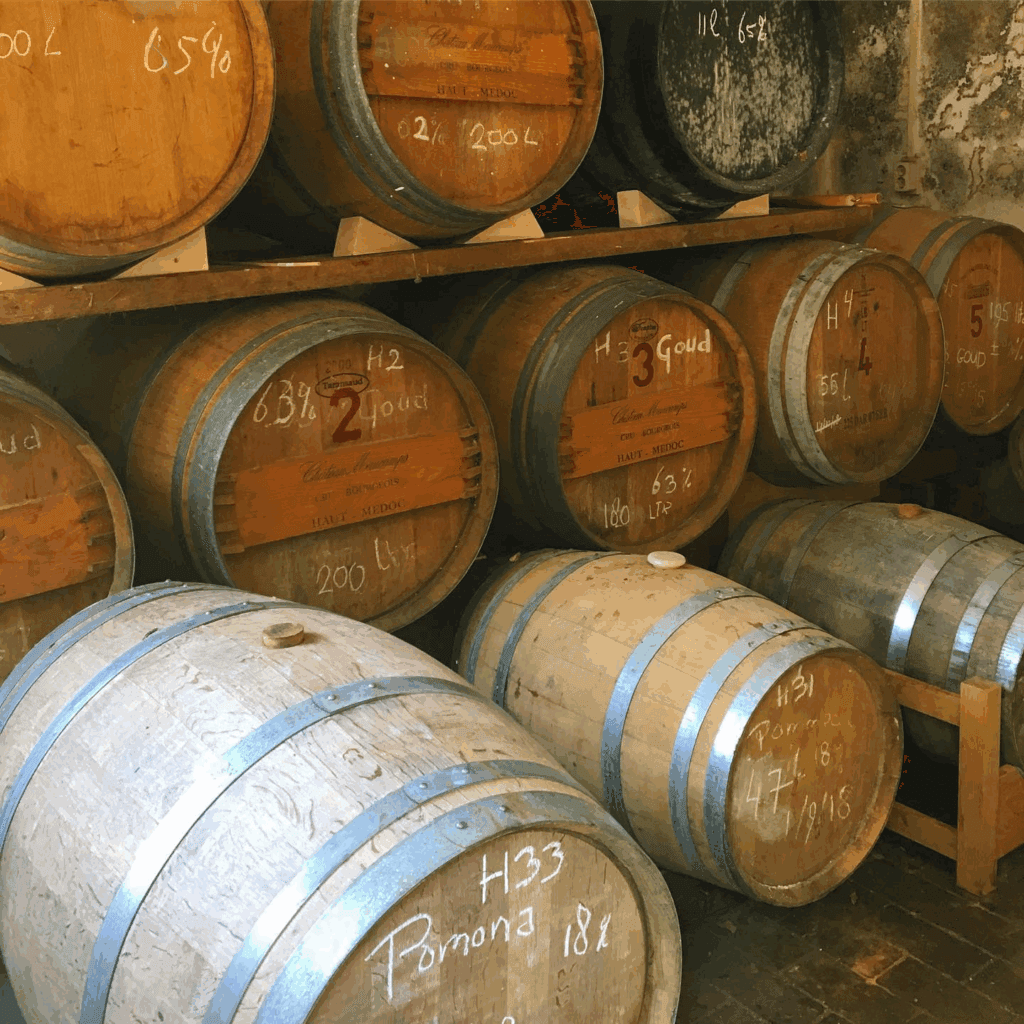
- Betuws Goud: Distilled from heritage high-stem apples (Alkmene, Notarisappel, Sterappel, Bellefleur) with some pear. Matured in Bordeaux casks, it resembles Calvados in character.
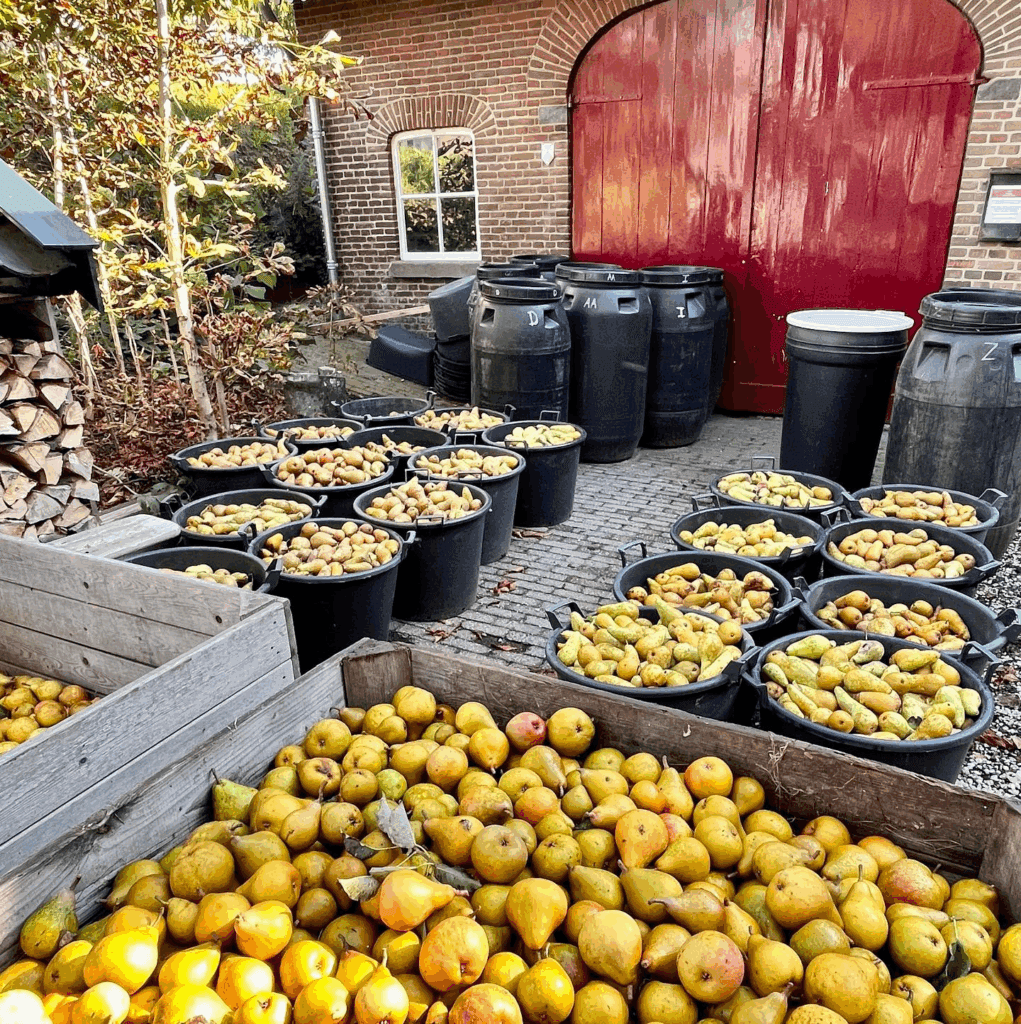
- Peer Conference: Made from the Netherlands’ most common pear variety, using about 4 kilograms of fruit per bottle.
- Peer Gieser Wildeman: Uses a traditional Dutch cooking pear created in the 1850s.
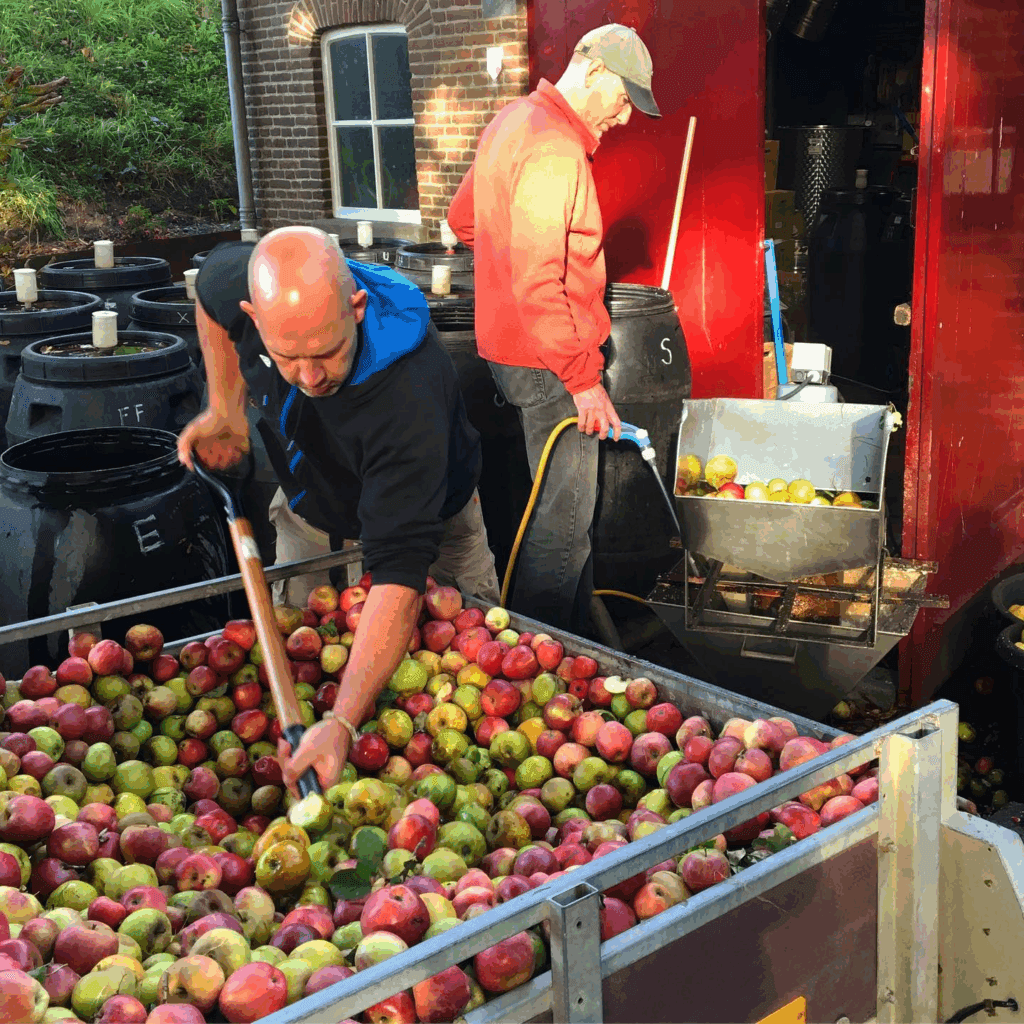
- Betuwer Appel (Goudrenet): Features the Belle de Boskoop apple, requiring approximately 5 kilograms of fruit per bottle.
- Framboos features Kwanza raspberry macerated in grain alcohol, using over two kilograms of berries per liter.
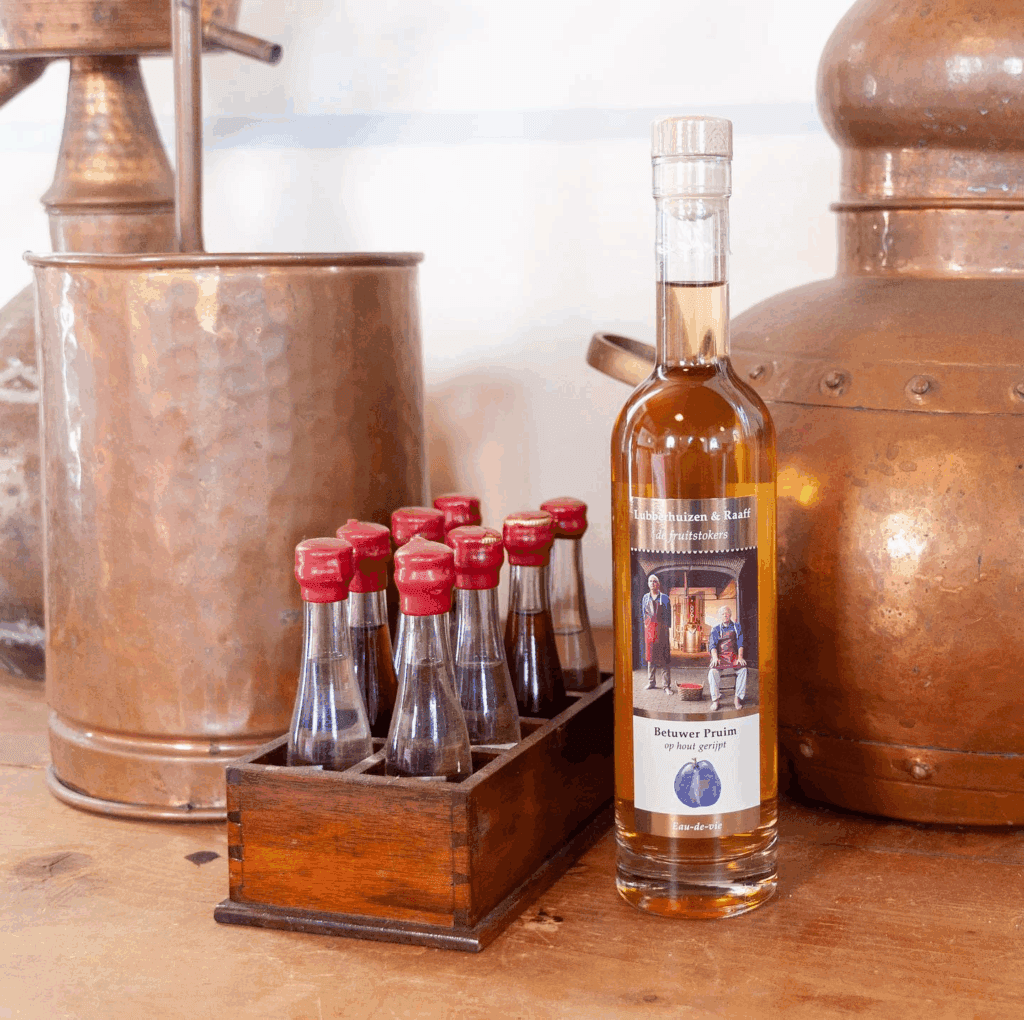
- Betuwer Pruim: Combines Opal, wijnpruim, and Reine Victoria plums, matured in Bordeaux casks, reminiscent of La Vieille Prune.
- Betuwer Kers: Incorporates various cherry varieties, including the heritage Varikse Zwarte.
Specialty Spirits (Exclusiviteiten)
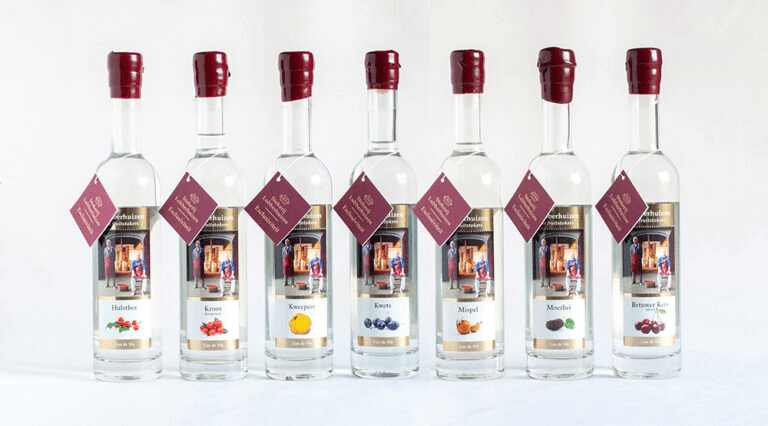
This range explores rare, heritage, and unique local fruits:
- Hulstbes (Holly Berry): Hand-harvested berries from the church in Ophemert, earning a silver medal at Destillata 2019.
- Kroos (Cherry Plum): Celebrates the endangered cherry plum (Prunus cerasifera), sourced from the last remaining orchard.
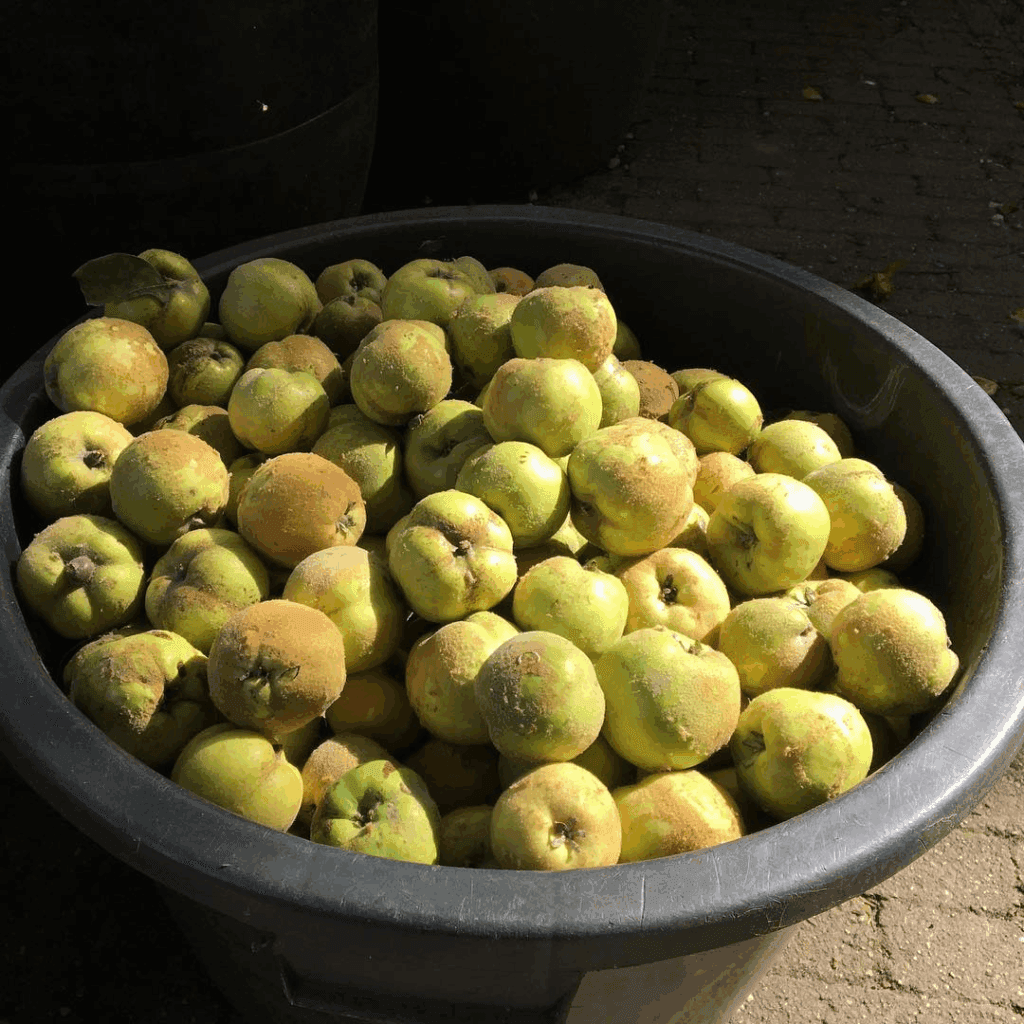
- Kweepeer (quince): The 2009 award winner, demanding exceptional skill to ferment and distill due to the fruit’s low sugar content. Approximately eight kilograms of fruit go into each 35cl bottle.
- Kwets (prune plum or damson) is sourced from high-stem orchards near Varik, distilled similarly to German Zwetschgenwasser, Swiss Pflümli, or Eastern European slivovitsj.
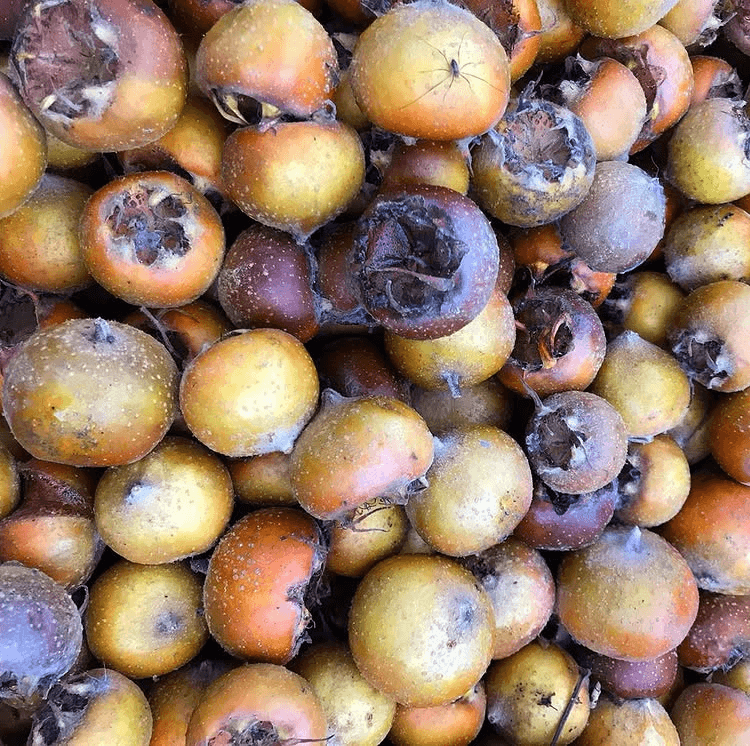
- Mispel: (medlar) is made from one of the few medieval winter fruits, unusual because it only becomes edible when bletted (partially decomposed).
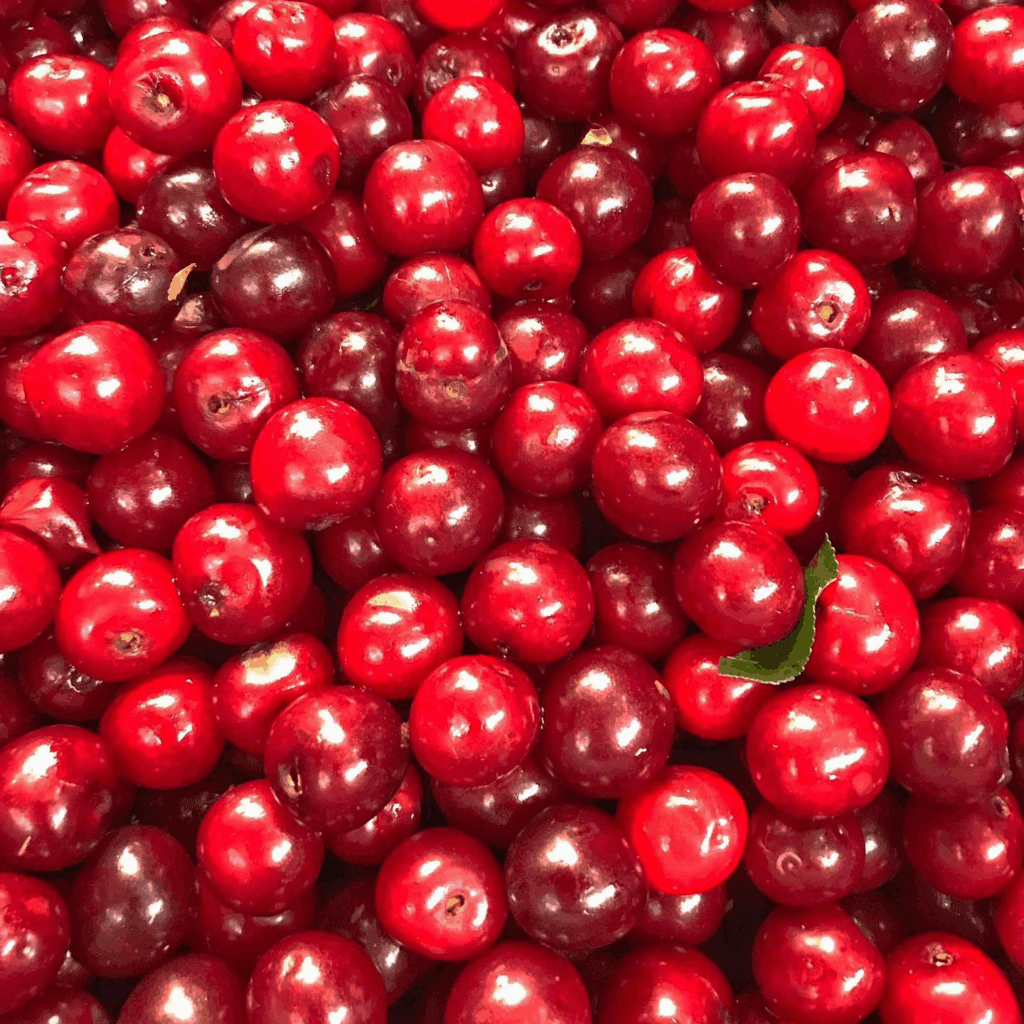
- Moerbei: combines white and black mulberries, while Betuwer Kers – Morel uses Morello cherries to create a spirit similar to traditional Kirsch.
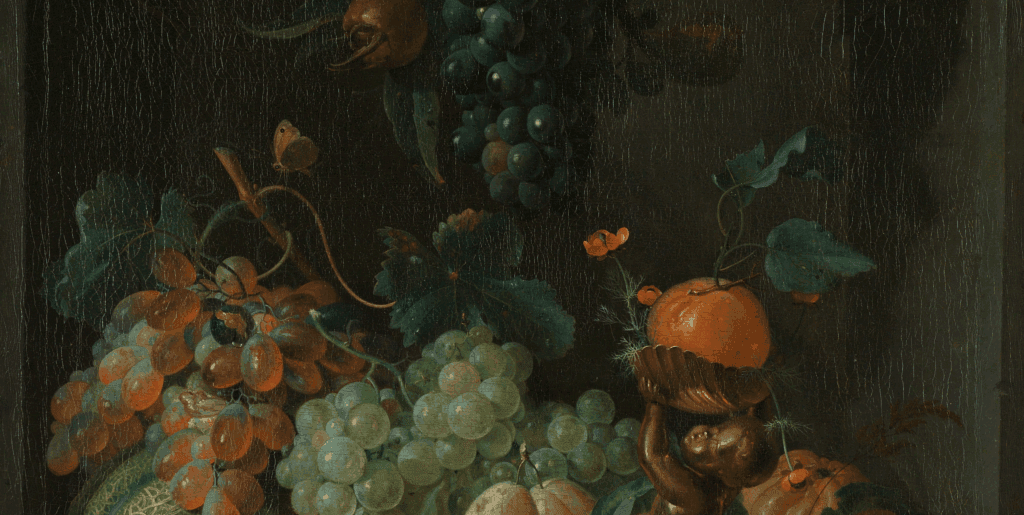
- Rijks Eau de Vie: Developed exclusively for RIJKS restaurant, this unique blend of cherries, medlars, pears, and quinces was inspired by Coenraet Roepel’s 1721 painting Still Life with Fruit in the Rijksmuseum collection.
Beyond Eaux-de-Vie
Lubberhuizen also crafts spirits that reinterpret traditional Dutch and European styles:
- Jenever: The range includes Varickse Echte, an unaged 100% malt wine distillate (Edelkorn); Varickse Jonge, and Varickse Oude, an oak-aged 100% malt wine. The label for Varickse Oude features a lithograph by local Varik painter Willem den Ouden (1928-2025), linking the spirit to regional art. The barley is malted by Vloermouterij Masterveld, the Netherlands’ only artisanal malthouse.
- Pomona: Comparable to Norman Pommeau, this blends Betuws Goud eau-de-vie with freshly pressed Betuwe apple juice and is matured on oak (18% ABV) without added sugar.
- Waalbitter: spices macerated in grain alcohol with Betuwe apple juice.
- Eau de Bière: distilled from craft beer and aged in Oloroso Sherry casks.
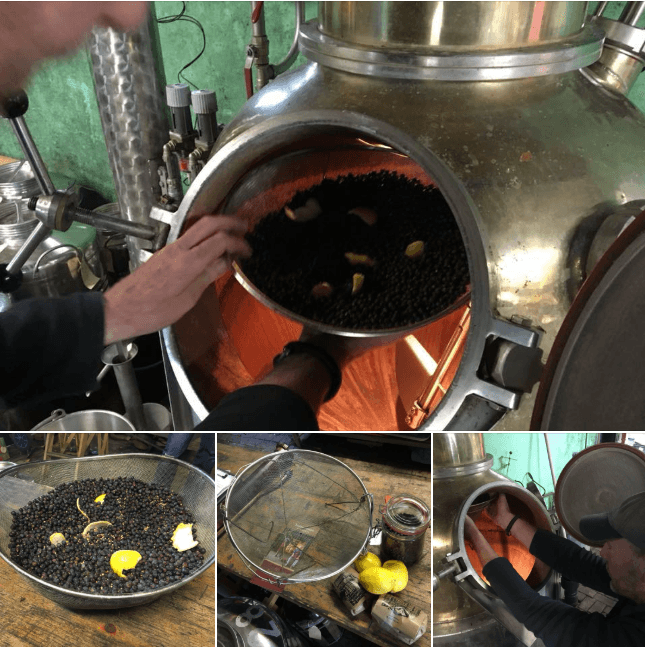
- Betuwe Dry Gin: A classic gin featuring juniper berries, coriander seeds, and fresh lemon peel.

The Liqueur Collection
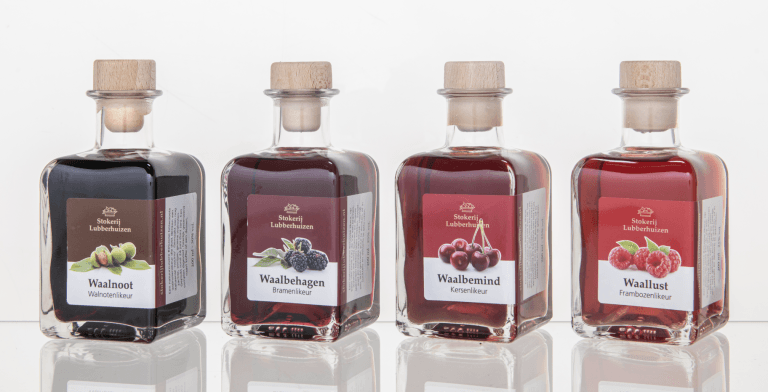
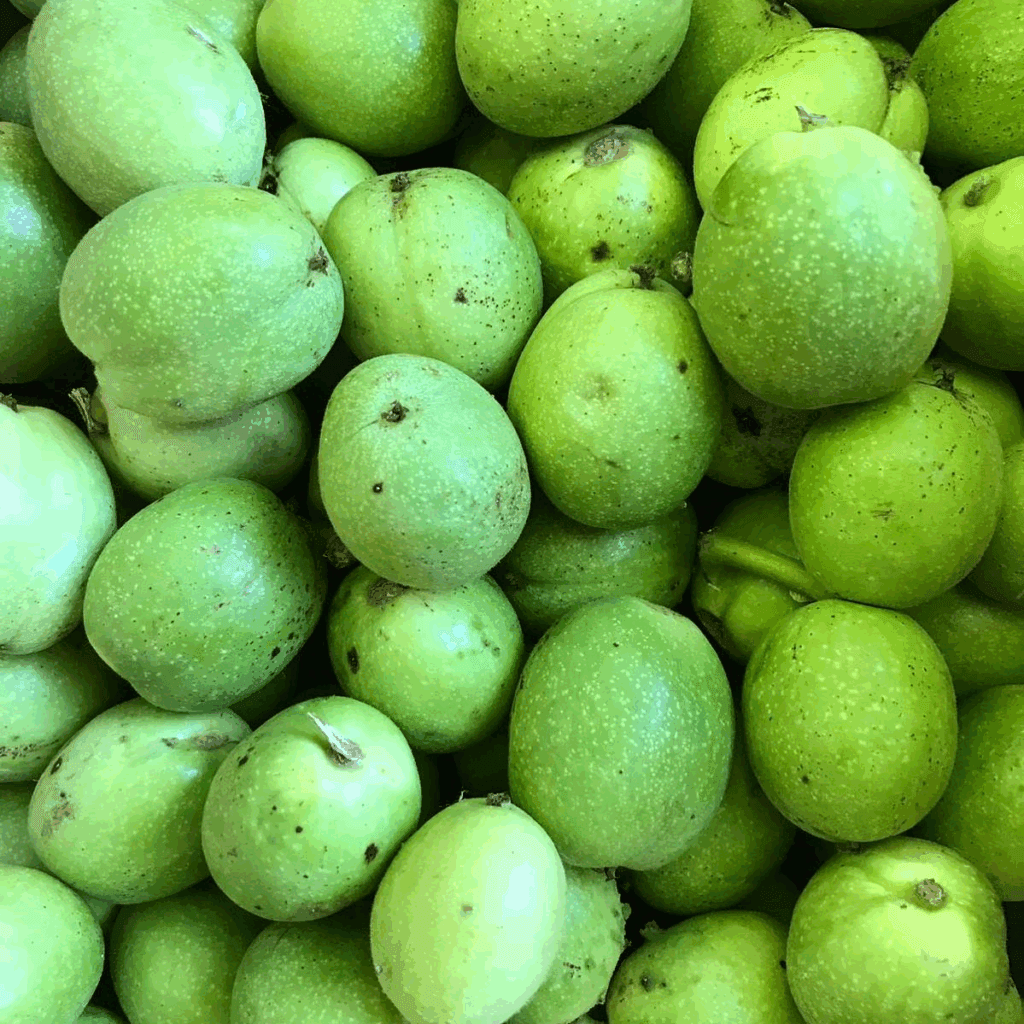
Launched in 2019 in collaboration with Jacob Hooy, this range uses the distillery’s own eaux-de-vie and locally sourced fruit for nuanced sweetness: Waalnoot (walnut, similar to Nocino.), Waalbehagen (blackberry), Waalgevormd (pear), and Waalbemind (cherry).
- Waalnoot – Walnotenlikeur
- Waalbehagen – Bramenlikeur
- Waalgevormd – Perenlikeur
- Waalbemind – Kersenlikeur
- Waallust – Frambozenlikeur
About
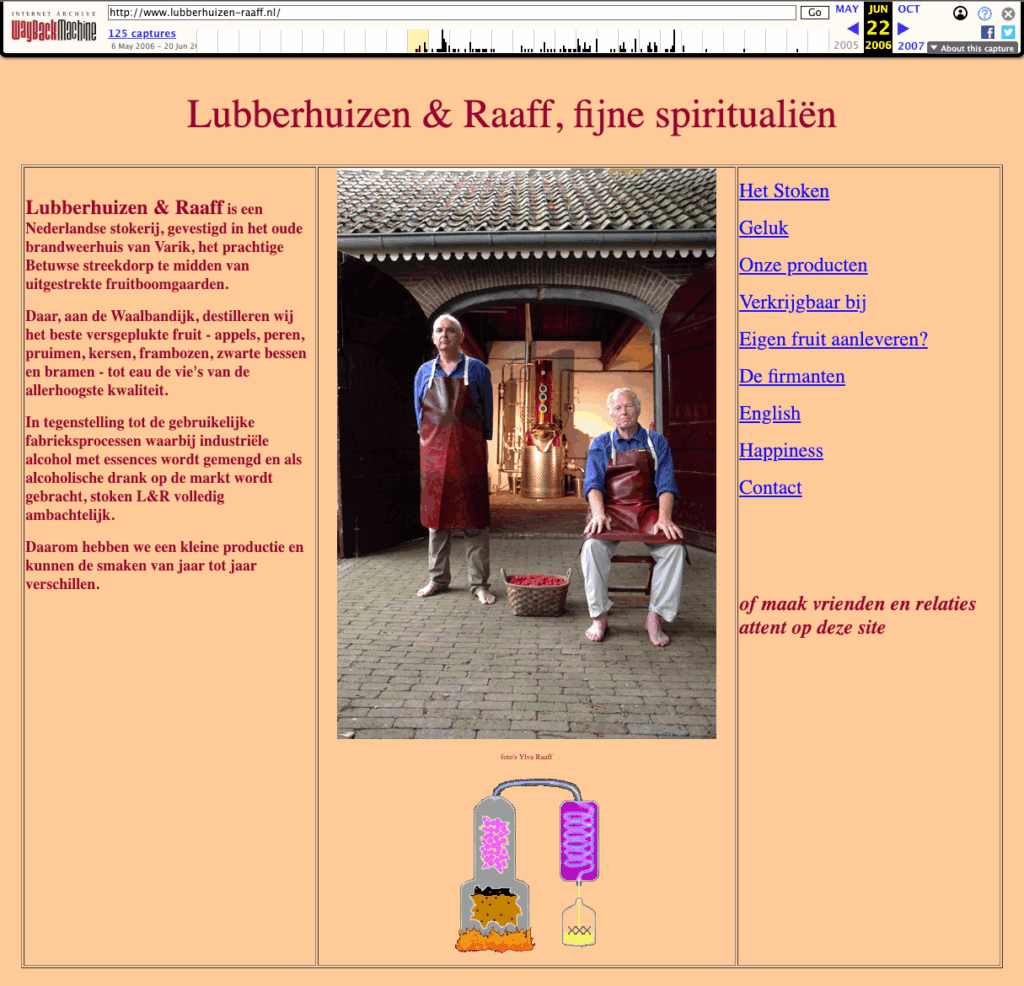
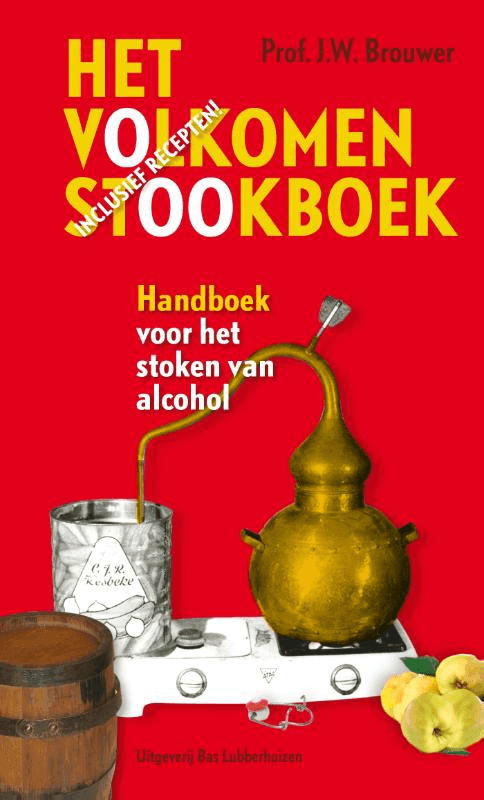
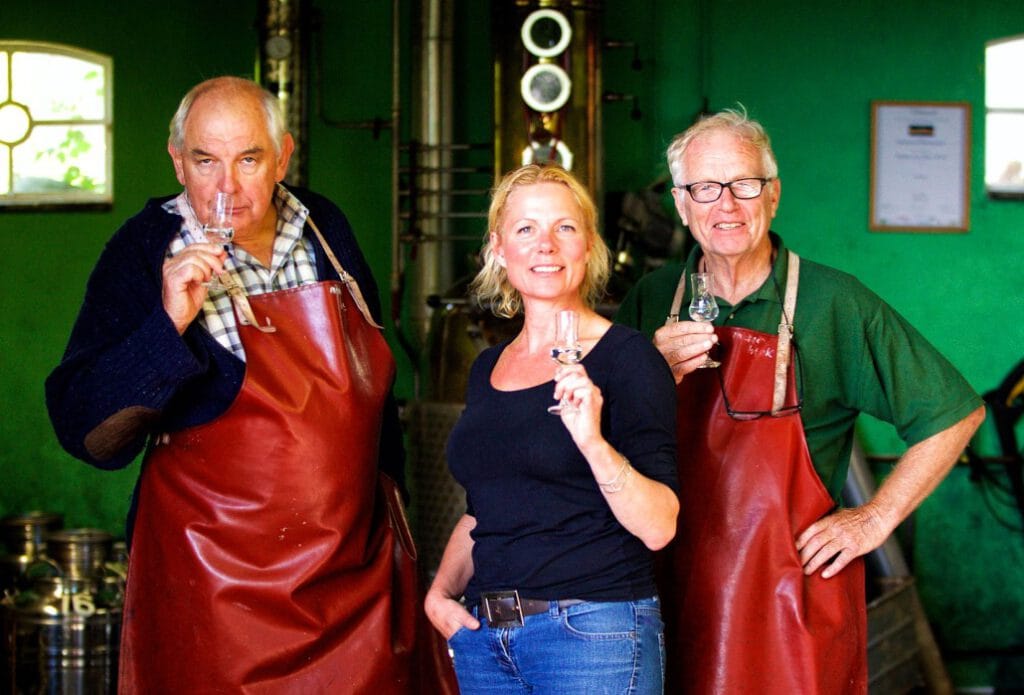
The distillery was co-founded in 2003 by Bas Lubberhuizen and writer and journalist Henk Raaff (born 1937), who had previously collaborated on Het Volkomen Stookboek (The Complete Book of Distilling) in 1991. The first distillation took place in 2005.
- In 2010, Ylva Raaff joined, later assuming day-to-day operations.
- Joost Lubberhuizen came on board in 2018 when Henk Raaff (81) retired.
- In 2025, as Bas Lubberhuizen (79) stepped back, entrepreneurs Michiel Spoor (Mobipers) and Nick Sluijter became partners, prompting the subtle name change to Lubberhuizen & Co.
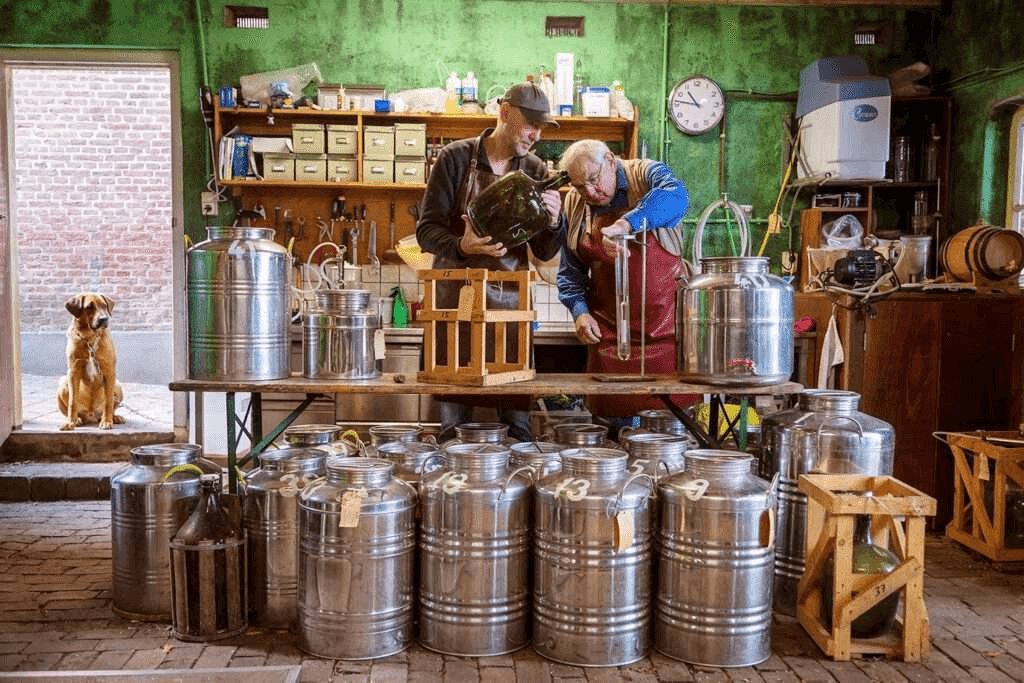
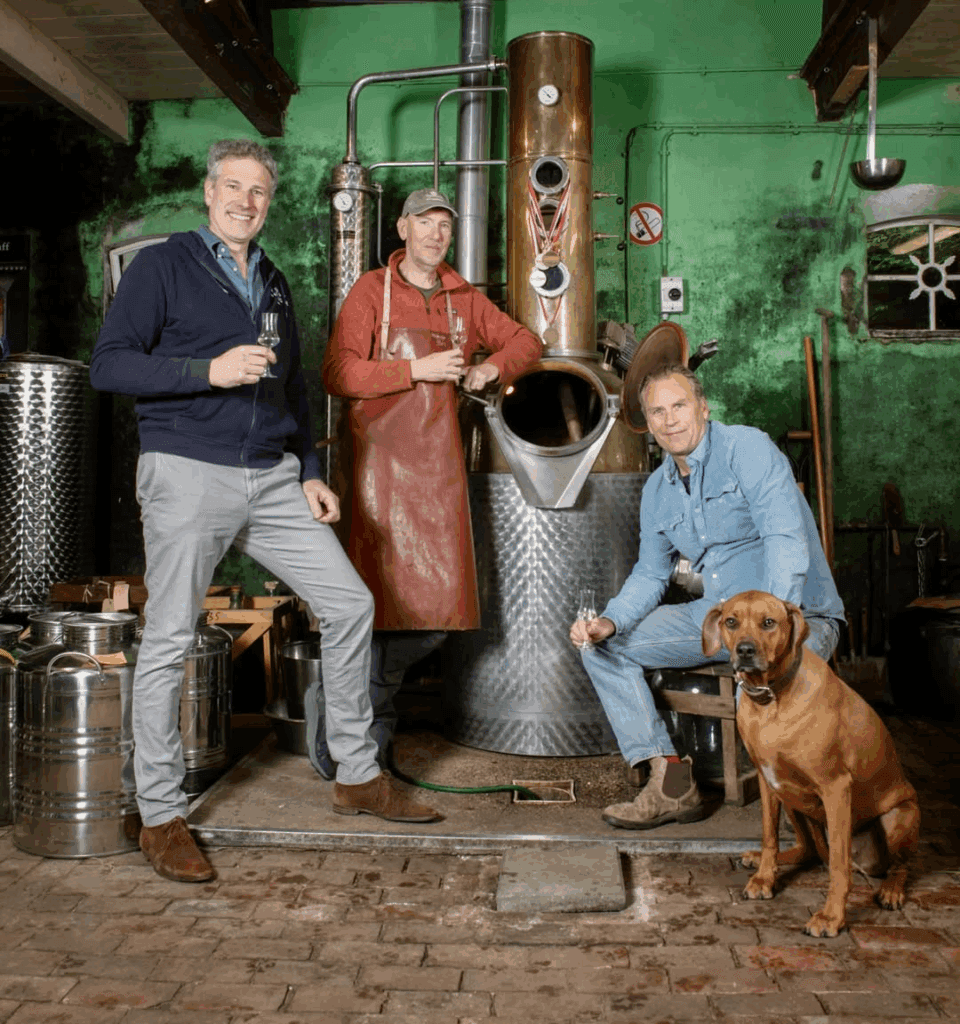
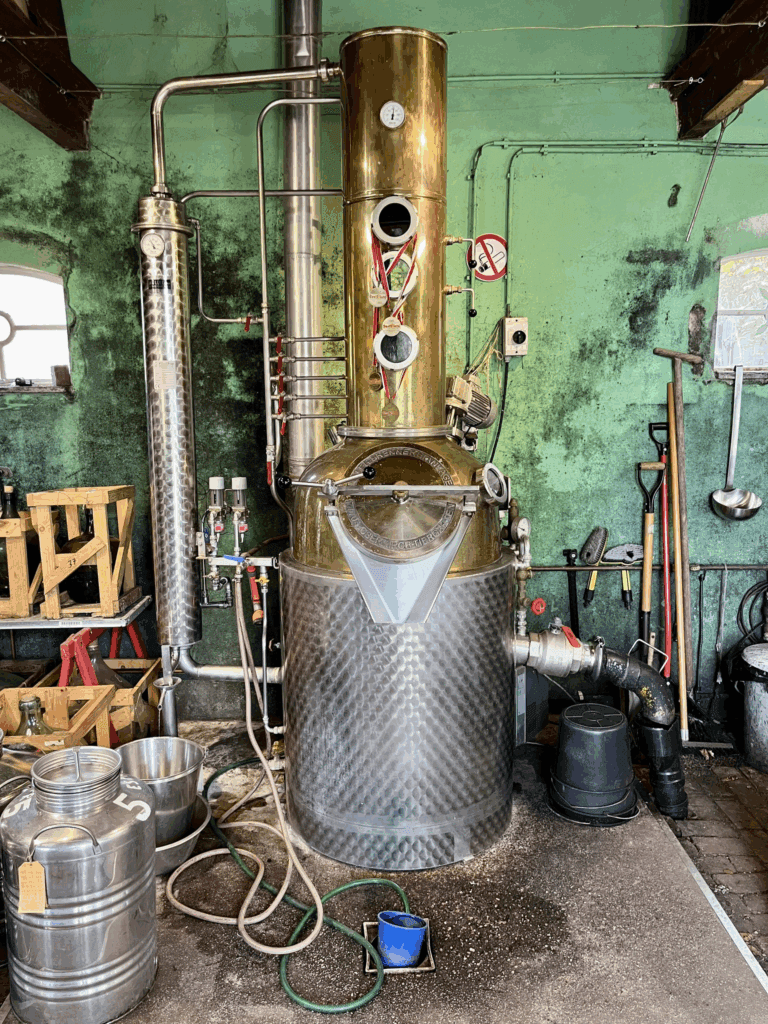
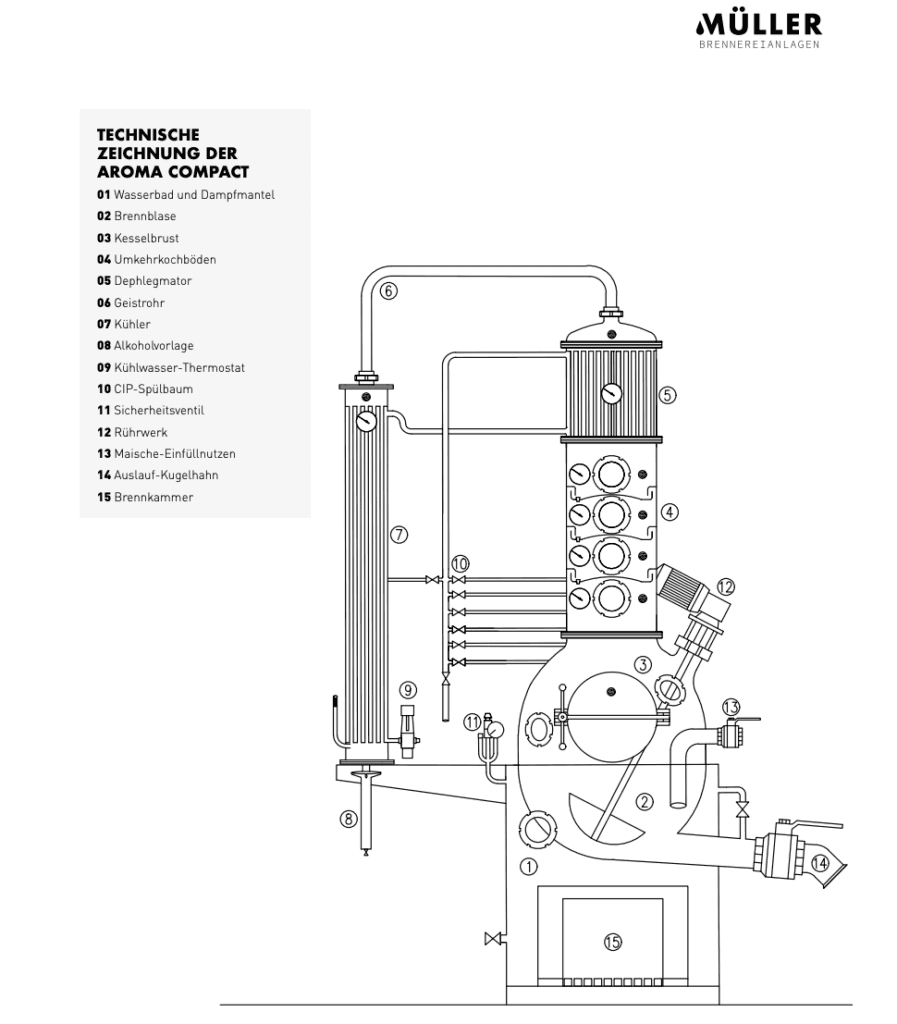
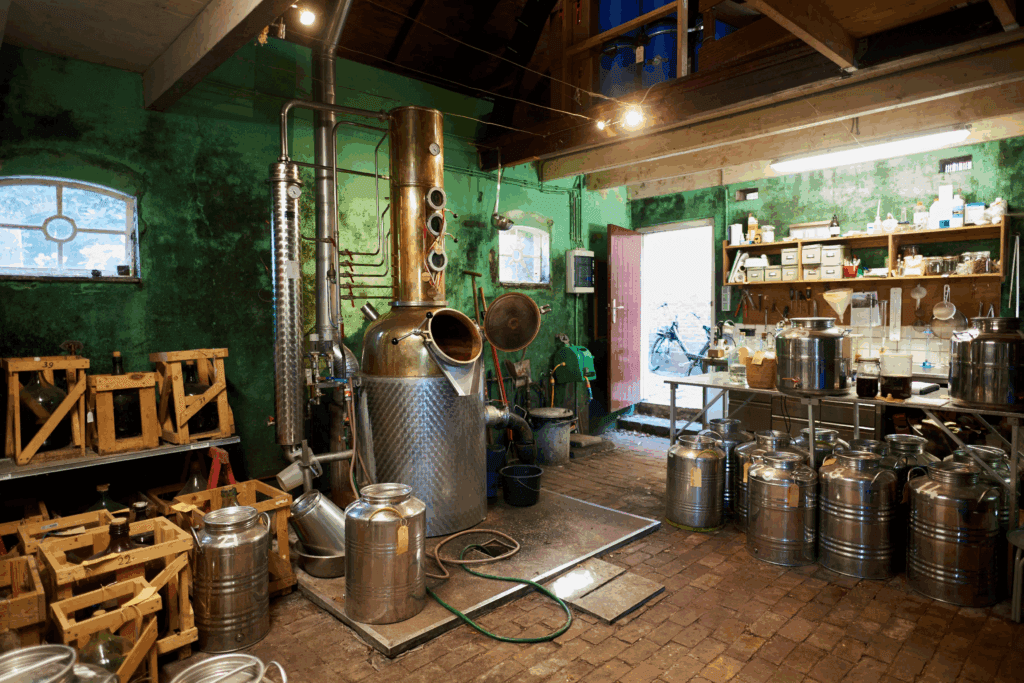
The artisanal production process uses a copper pot still crafted by Müller Brennereianlagen in Germany and utilizes wooden casks sourced from prestigious houses like Tonnellerie Saury (Bordeaux).
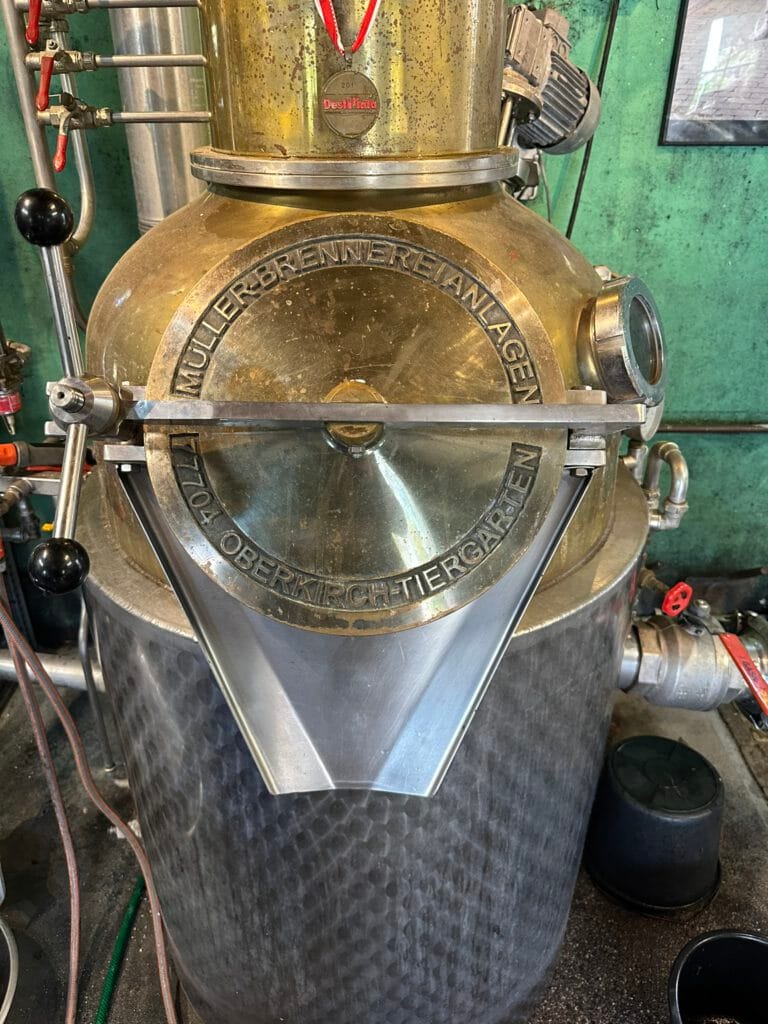
The Light Line 2/2940 model (148 liter capacity, 220 liter wasserbath).
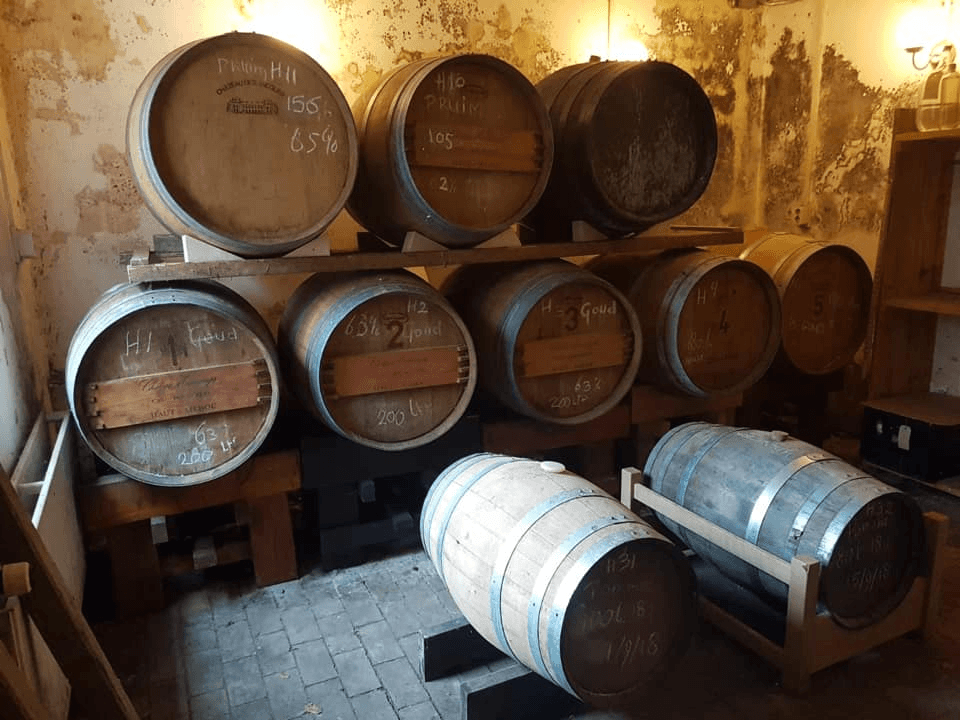
Wooden casks are sourced from Tonnellerie Saury (Barrique Saury Classic) and Tonnellerie de Jarnac in Bordeaux, as well as from Château des Jacques in Beaujolais and Château Maucamps in Médoc.
Terroir
The Betuwe, situated between the Waal, Nederrijn, and Lek rivers in Gelderland, has long been recognized as one of the Netherlands’ premier fruit-growing regions. Its fertile river clay soils proved ideal for apple, pear, cherry, and plum cultivation. Fruit cultivation intensified dramatically after the mid-19th century, transforming the landscape from scattered farmstead orchards into extensive commercial operations. Mid-20th century agricultural restructuring (ruilverkavelingen) enabled transition from high-stem to more efficient low-stem cultivation, though Lubberhuizen continues to champion heritage high-stem fruit varieties.
.jpg)
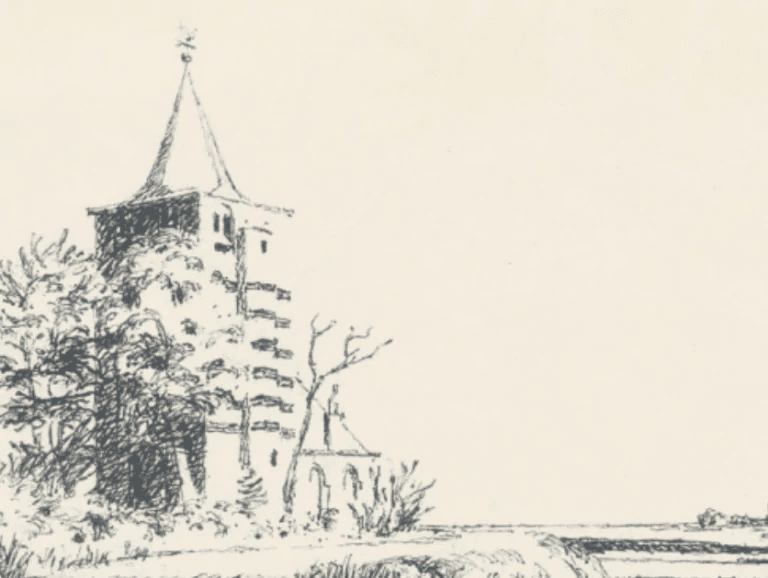
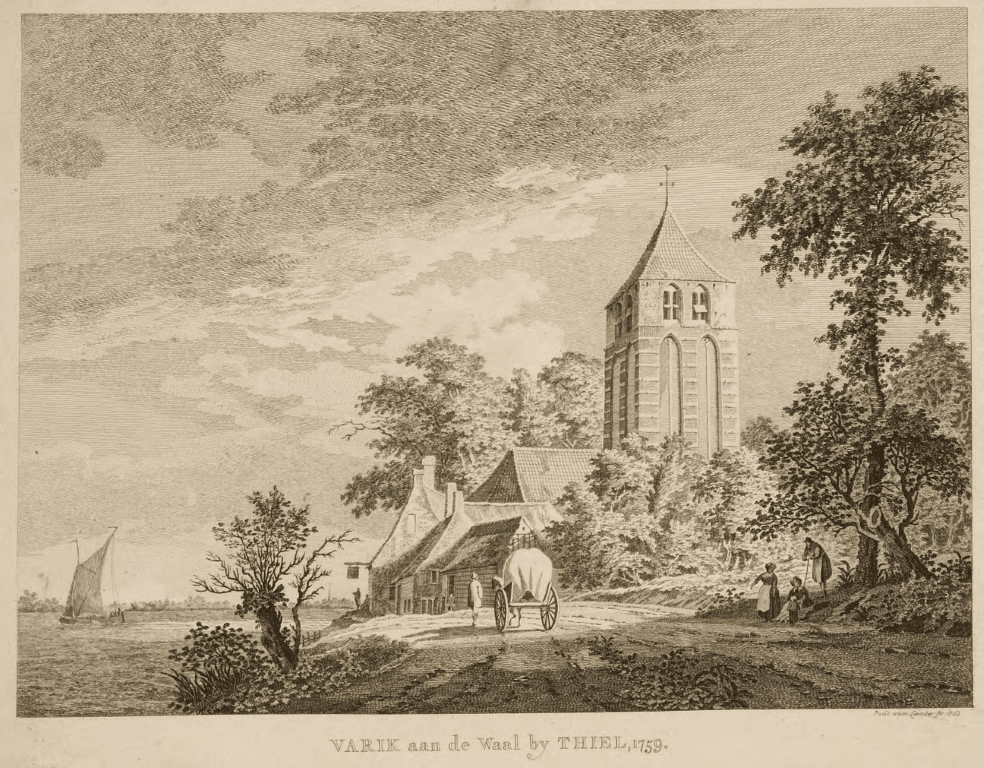
Varik’s history extends to the 10th century, when a farmstead called Feldrike occupied the site. The village’s iconic tower was built around 1300. The distillery operates from two historic buildings on Waalbanddijk: number 12 (the former parish clerk house and schoolhouse, circa 1841, designated as national monument 30361) and number 10 (the former fire engine house from 1885, municipal monument). Together, these structures house both the distillery and Proeflokaal ‘d Oude School, the tasting room.
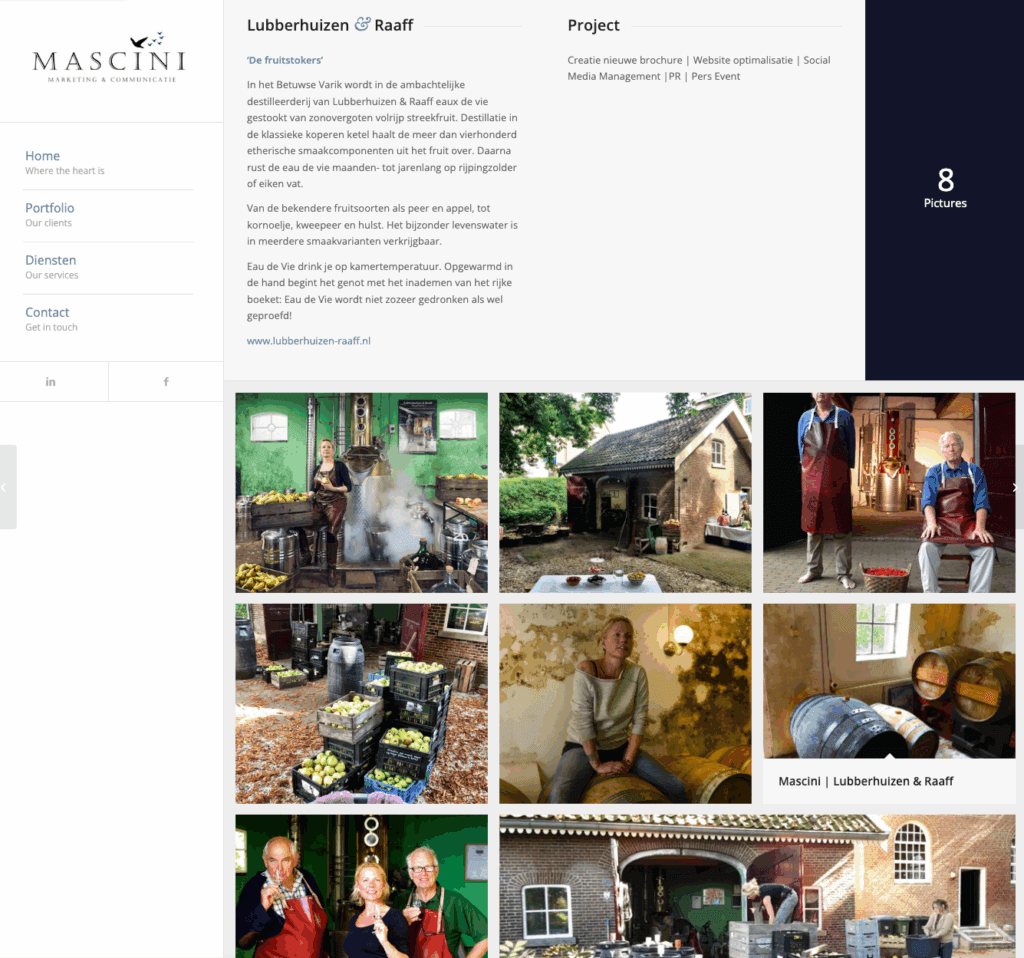
Brochures
Press
Except for Kleinbrennerei, the articles and videos listed below are in Dutch.
- Stadshuidje afdoen en even ademhalen in de Betuwe, Harm van de Berg, NRC, 12 augustus 2000
- De volle smaak van gegist fruit – Marjoleine de Vos, NRC, 25 september 2006
- Het Geluk van het wachte – Mark Moorman, Parool, 9. november 2006
- Lubberhuizen & Raaff – Kleinbrennerei 03/2008
- Meer dan een herenhobby – Marc van Dinther, Volkskrant, 26 juni 2008
- Eau de Vie uit Varik, Renate van der Bas, Bouillon 25, 2009
- Het Leven – Joël Broekaert, De Alleseter, Vrij Nederland, 8 maart 2014
- Eau de vie fantasie – Marjoleine de Vos, NRC, 14 februari 2015
- Een neus voor sterke drank – Rosan Hollak, NRC 2016
- Kijkje in de ketel van drie vrouwelijke distilleerders – Rosan Hollak, NRC 2016
- De nieuwe drankhype: eau de vie op zijn Hollands – Mac van Dinther, 2017 Volkskrant
- Levenswater zoekt meer liefhebbers – Misset Horeca, 2017
- Gedistilleerd Brevet (SDEN3) | Wijnacademie & Lubberhuizen 2019
- Fruitstokers uit Varik zoeken de ziel van het fruit voor hun digestief – Gerard Menting, De Gelderlander 9 december 2019
- Stokerij Lubberhuizen & Co (Wikipedia)
- Short interview with Henk Raaff from the early days (2007).
Remco Boas TV Gelderland Nieuws, September 2008
- André stookt eau de vie – episode by André Amaro for Omroep Brabant (2009).
- Petra Possel for NTR tv-program Landinwaarts (2015).
- Appeltje voor de dorst – Melk & Honing (2015)
- Een wagen vol verhalen, Omreop Gelderland S3-#10 (2016)
I Love De Achterhoek November 2020 (Omroep Gelderland)
About the Founders
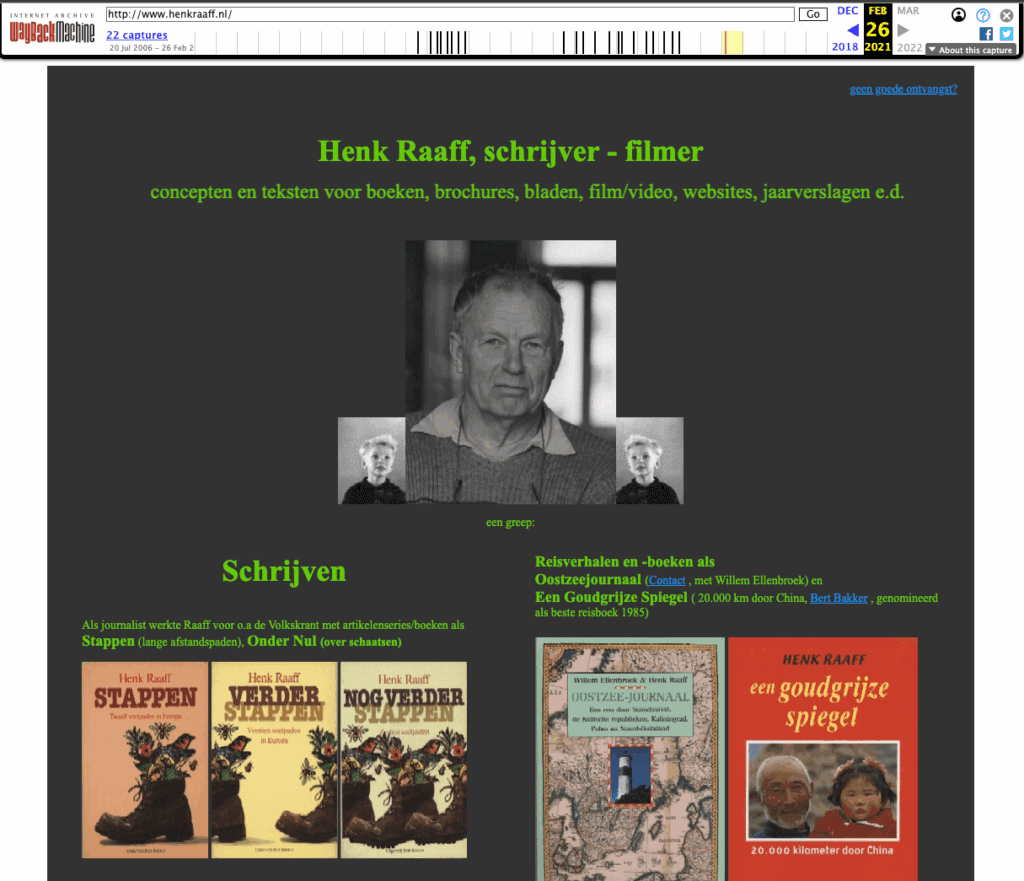
Henk Raaff
Henk Raaff (born 1938) is a Dutch writer, journalist, and documentary filmmaker whose career has encompassed travel reportage, architecture, and urban development. He worked for prominent Dutch publications including De Volkskrant and Vrij Nederland, while creating documentaries for VARA and NOS on topics ranging from Amsterdam’s Betondorp neighborhood to urban districts. Raaff authored notable travel books including Oostzee-journaal (1995) about Scandinavia and the Baltic region, and Een Goudgrijze Spiegel (2003), documenting a journey across China, Russia, and Mongolia.
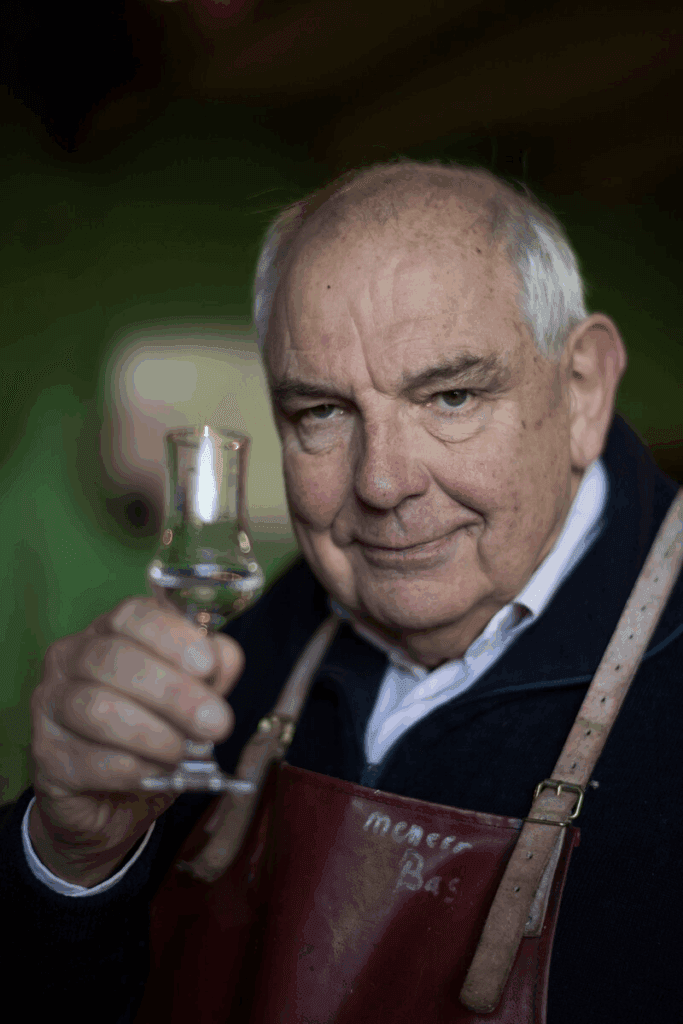
Bas Lubberhuizen
Bas Lubberhuizen (born 1946) is a well-known figure in Amsterdam’s cultural and hospitality scene. He is the son of Geert Lubberhuizen (1916-1984), the founder and long-time director of the influential literary publishing house De Bezige Bij (The Busy Bee).
Following in his father’s footsteps, Bas Lubberhuizen was active as a publisher himself, establishing Uitgeverij Lubberhuizen (1981-2012), before founding a distillery. Additionally, he owned and managed several prominent catering establishments in Amsterdam, which often served as meeting places for artists and writers. These include the Litterair Cafe Engelbewaarder (1971-1982), Café Welling (from 1978 onwards), and Café Vertigo (1989-2000). Café Welling is now known as the ‘ultimate living room of Amsterdam-South’. Lubberhuizen’s influence as a cultural entrepreneur is highlighted in articles that describe his role where “art and drink meet.”
- Lubberhuizen | Klaas Koppe
- ‘je lijkt op hem’ – Theodor Holman, De Groene, 1996
- ‘Schrijvers vergen te veel omhelzingen’ – NRC 2012
- Waar kunst en drank elkaar ontmoeten – NRC 2019
- Café Welling is de ultieme huiskamer van Zuid – Parool 2019
Internet Archive