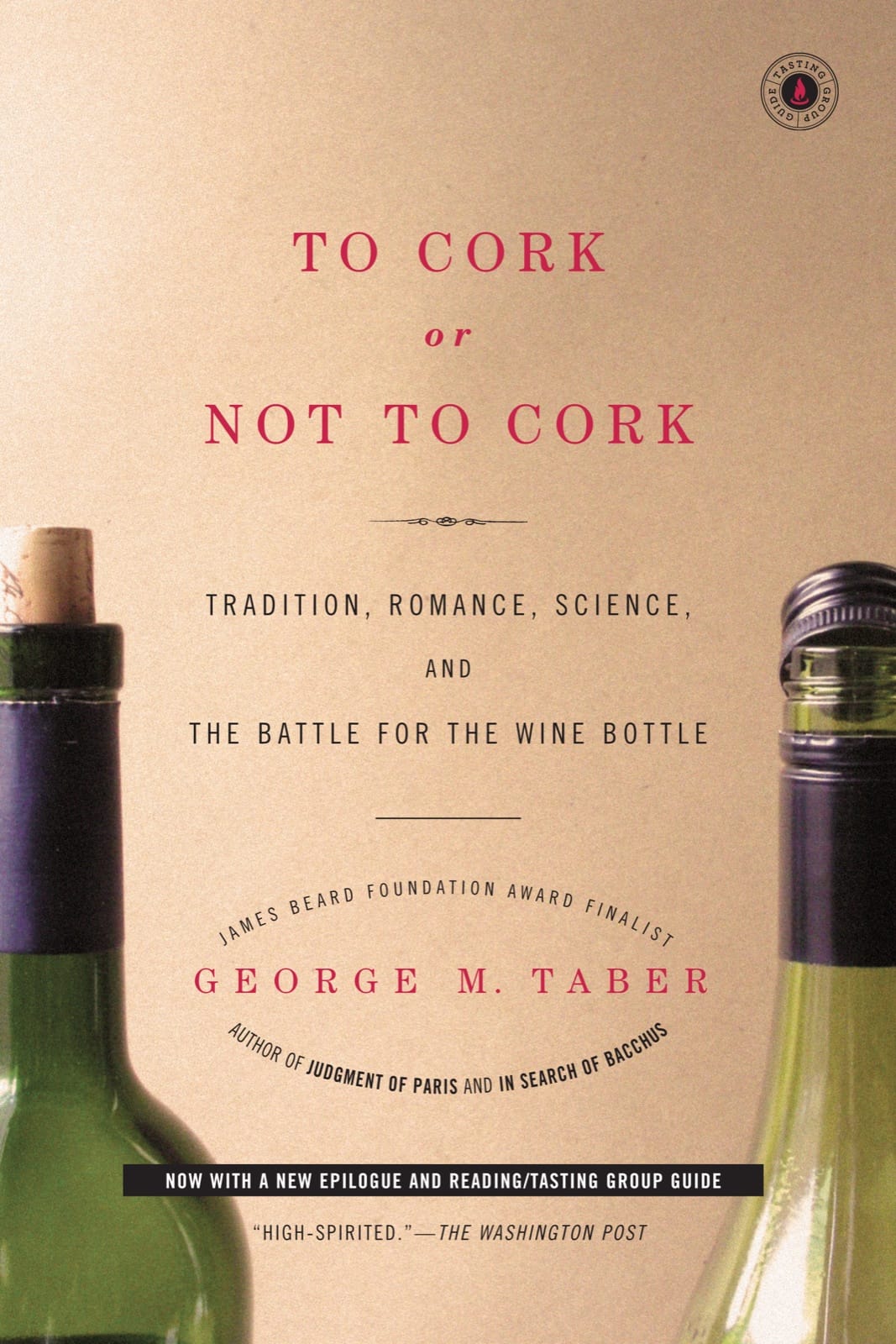
Book Notes: George M. Taber – To Cork or Not To Cork (2007)
About the Author
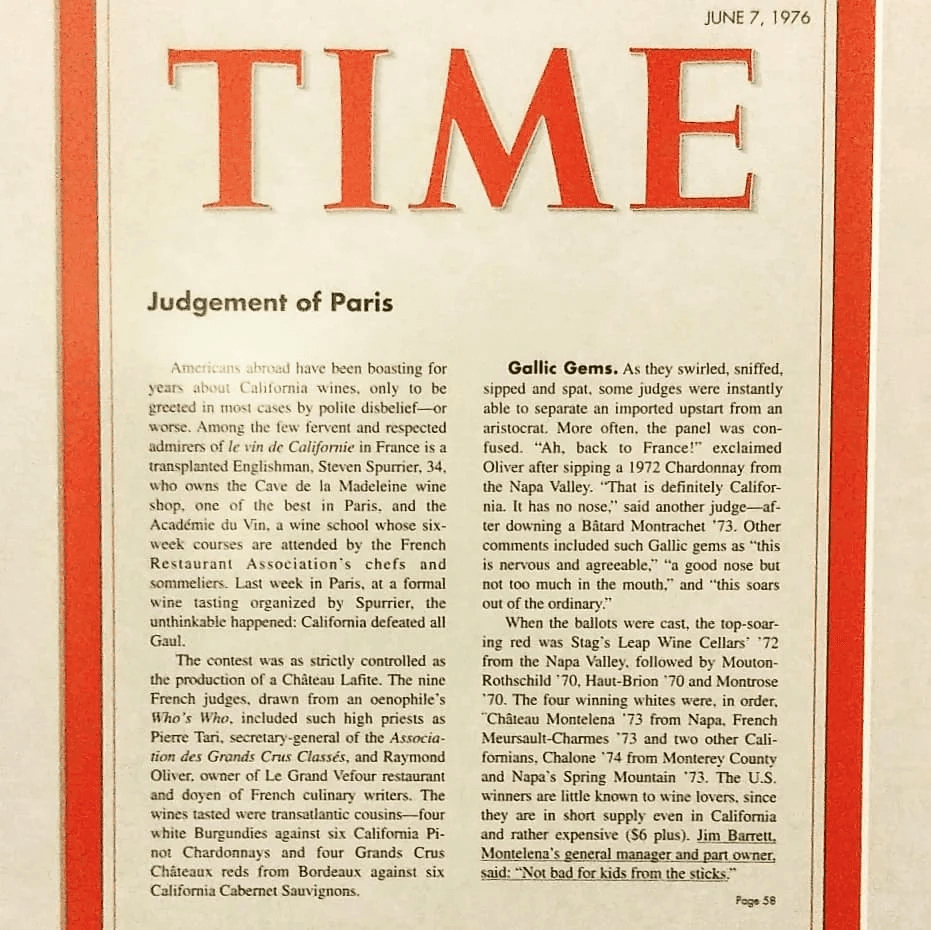
George McCaffrey Taber (b. 25 May 1942). Reporter and editor at Time for 21 years; Paris bureau 1973–76. The only journalist present at the Judgment of Paris, 24 May 1976; his four-paragraph report ran in the 7 June 1976 issue.
- NPR – The Judgment of Paris: the blind taste test that decanted the wine world (2016)
- Wine Spectator – The Sip Heard Round the World
Other books
- Judgment of Paris – California vs. France and the Historic 1976 Paris Tasting That Revolutionized Wine (2005)
- In Search of Bacchus – Wanderings in the Wonderful World of Wine Tourism (2009)
- A Toast to Bargain Wines (2011)
- Chasing Gold (2014)
About the Book
The narrative opens at the David Bruce Winery in California, where corked bottles introduce the central problem. Cork’s critics argue that a 3–5% failure rate would put Toyota or IBM out of business. From there Taber traces four centuries of cork’s near-monopoly and the disruption that followed Hans Tanner’s identification of 2,4,6-trichloroanisole (TCA) in 1981: an expert taster detects TCA at 1 part per trillion, the average consumer at about 5.
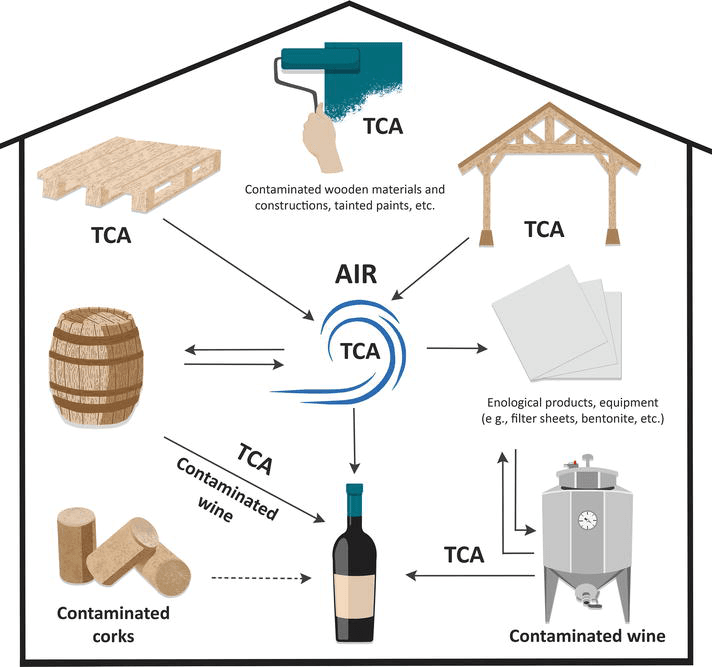
Twenty-four chapters, each centred on one actor or development: the biology and manufacture of cork; Portugal’s decade of quality failures; the French industry’s reluctance to acknowledge TCA; screwcap adoption in Australia and New Zealand; synthetic closures (Supreme Corq and successors); Randall Grahm’s funeral for the cork; Amorim’s reform and screening programme; oxygen transmission and ageing; a closure market of about 20 billion units a year. The conclusion finds no perfect closure and leaves the debate open.
Reviews and Interviews
- Jancis Robinson – Battle of the bottle stoppers (FT / JancisRobinson.com, 2007)
- Vinography (Alder Yarrow) – Book Review: To Cork or Not To Cork (2008)
- Wine Spectator – A Close Look at a Controversial Closure (2007)
- Wine Economist (Mike Veseth) – Put a Cork in It?
- Knowledge at Wharton – To Cork or Not to Cork: the wine industry’s battle over the bottleneck (podcast/interview)
- IntoWine – Cork, screwcaps or plastic: author George Taber talks bottle stoppers (interview)
Chapters
1. Nature’s Nearly Perfect Product
Cork under the microscope; amphorae; cork and glass in England; the corkscrew patent of 1795. In Micrographia (1665), Observation XVIII, Robert Hooke cut a slice of cork, saw a honeycomb of pores, and named them “cells” after the rooms of a monastery — the word biology still uses.
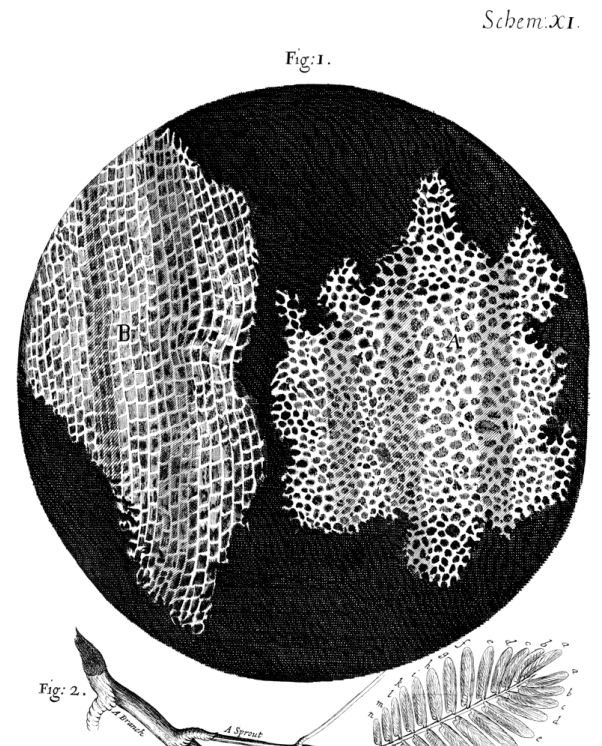
Now. The idea that cork “breathes” is rejected: a sound cork releases the oxygen dissolved in its own structure during the first months after bottling, then admits a near-negligible ingress, and holds its seal for around 50 years (Goode, 2025).
- Hooke – Micrographia, Observ. XVIII (Project Gutenberg)
- Science History Institute – Hooke’s cork plate, 1665
- Jamie Goode – Closures for Wine: From Faults to Confidence, IWC Insight (21 Oct 2025)
2. The Making of a Cork
First industrial cork company 1750; Portugal; the Whistler tree.
Now. Amorim Cork sells more than 6 billion stoppers a year in 90 countries; but sales are down and still-wine stoppers the weakest product line, against a wine market in structural decline.
3. Science in the Service of Wine
Pasteur; phylloxera; Geisenheim (1872), Bordeaux (1880), Davis (1880). Hans Tanner’s team identifies TCA by GC-MS in 1981 and publishes in 1982; their analogy for the threshold was two sugar cubes sweetening Lake Constance.
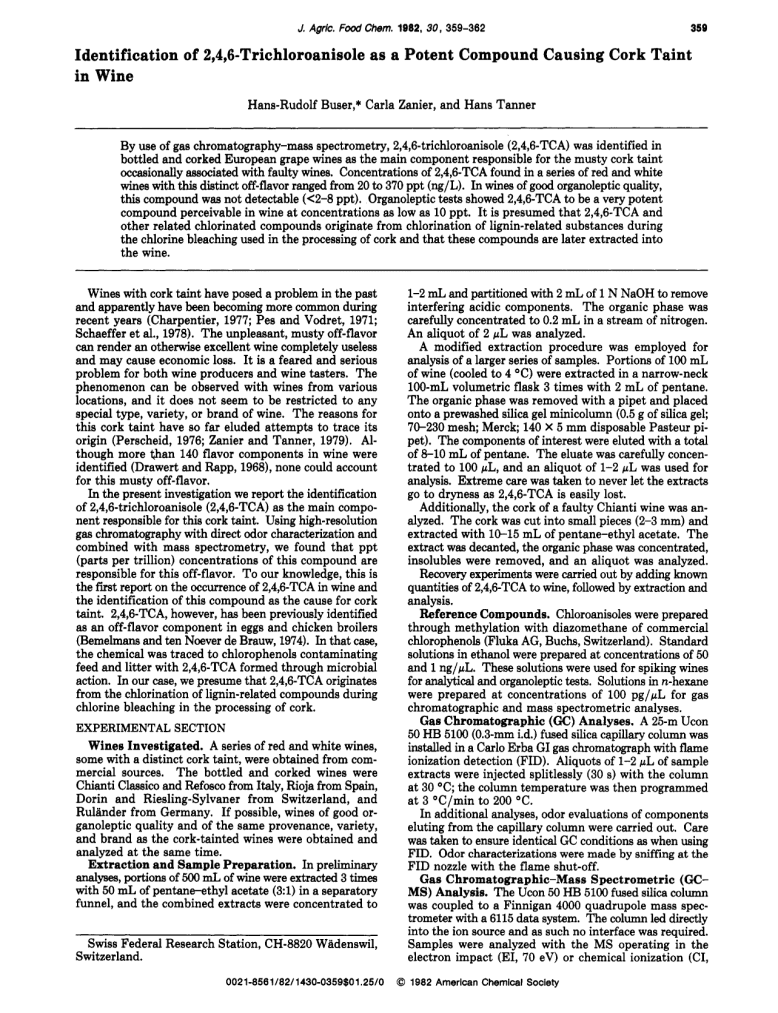
Now. TCA is held responsible for 50–80% of musty-defect cases; 2–5% of world wine is estimated corked at a cost above US$1 billion a year (Zhou et al., 2024); the sensory threshold is put at 1.4 ng/L in wine and 0.03 ng/L in dealcoholised wine (Vinventions, 2025); and a portable electronic nose classified sparkling wines above 2 ng/L with 88% accuracy (2025).
- Buser, Zanier, Tanner – Identification of 2,4,6-trichloroanisole as a potent compound causing cork taint in wine, J. Agric. Food Chem. 30 (1982)
- Zhou et al. – Cork taint of wines: the formation, analysis, and control of 2,4,6-trichloroanisole, Food Innovation and Advances 3(2) (2024)
- Detection of TCA in Sparkling Wines Using a Portable E-Nose, Chemosensors 13(5) (2025)
- Sean P. Sullivan – Everything You Ever Wanted to Know About Cork Taint, Wine Enthusiast (2023)
4. The Long Search for an Alternative
Screwcap invention; Stelvin; Riunite 1974–2000; Australia 1976.
Now. Stelvin’s owner Amcor marked the closure’s 60th anniversary in 2024 with the claim that one bottle in three worldwide is screwcapped, while the AWRI trial of 1999 — one Clare Semillon under 14 closures — was halted after three years because the results were clear-cut and several closures had already left the market.
- Amcor/Stelvin 60th anniversary, CanTech (2024)
- AWRI – First results of the closure trial (12 July 2001)
- Godden – Summary of AWRI closure trials, Technical Review 248 (2020, PDF)
5. A Disastrous Decade for Portuguese Cork
Post-revolution nationalisations; demand rising without competition.
Now. Portuguese cork exports reached a record €1.232 billion in 2023, stoppers making up about 73% of the total; APCOR’s 200-plus member companies account for around 80% of national production and 85% of exports, and Portugal holds 34% of the world’s cork-oak forest and about half of world cork production.
- APCOR – members
- Sul Informação – Portuguese cork exports reach €1.232 bn (2024)
- The Portugal News – Record year for Portuguese cork (2022)
6. Rise of Australia
Research centre shifts from UC Davis to the Australian Wine Research Institute (AWRI); ETS Labs in California.
Now. Australian Grape & Wine puts 98% of Australian wine under screwcap (2023), and the Clare Valley marked 20 years of screwcapped Riesling with 2002/2012/2022 comparative tastings in 2022.
- Clare Valley Wine – 20 years of screwcapped Riesling (Huon Hooke)
- Oz Wine Review – Turning point: 21 years of Clare Riesling in screwcap (2023)
- Lewis Perdue – The Wrath of Grapes (2011)
7. The French Cover-Up
Pascal Chatonnet — two doctorates from Bordeaux University, founder of the Excell laboratory, consultant winemaker, family estates in Lalande-de-Pomerol.
- pascalchatonnet.com
- Margaret Rand – Pascal Chatonnet: Eminence grise par excellence, World of Fine Wine (19 June 2025)
- Tim Atkin – Cork Talk with Pascal Chatonnet (podcast, 2023)
8. Supreme Corq Breaks the Monopoly
Injection-moulded synthetic, Kent, Washington; founded 1992; about 40% of the synthetic market at its peak.
Now. Supreme Corq folded early in 2011, after NuKorc (2010) and the sale of Neocork (2010), leaving the co-extruded Nomacorc — launched 1999, parent Vinventions since — as effectively the synthetic category.
- Wine Wisdom (Sally Easton) – Closure trends (2012)
- NBC News – Building a better wine cork (Supreme Corq factory)
- Vinventions – 25 years: from Nomacorc to global closure solutions (2024)
9. From Perfect Cork to Perfect Disaster
Sabaté’s Altec; the Oeneo rescue.
Now. Diam Bouchage (Oeneo) has applied its Diamant supercritical-CO₂ process to every product since 2004 with a releasable-TCA guarantee of ≤0.3 ng/L, added the cork-clad Diam Collection in 2025 and the LiOX closure in 2026, which replaces oxygen in the cork cells with CO₂ and halves oxygen intake over the first 200 days; in Washington State DIAM-type closures rose from 6% of wines reviewed in 2016 to 27% in 2021.
- Diam – press kit
- DirectIndustry – How Diam Bouchage keeps reinventing the cork (LiOX, May 2026)
- Sean P. Sullivan – Alternative closure use surges in Washington (2023)
- Jamie Goode – Sabaté Altec (2002)
10. A New Generation at Amorim Makes Big Changes
Now. Amorim’s NDtech (2016, €12 m and six years of R&D) screens every natural cork by fast gas chromatography and rejects any above 0.5 ng/L releasable TCA; Naturity (thermal desorption, natural cork) and Xpür (supercritical CO₂, micro-agglomerates, to 0.3 ng/L) delivered the non-detectable-TCA target the company had set for 2020; and the twist-off Helix cork was relaunched in December 2025 for young, organic and no/low wines.
- Amorim Cork – NDtech
- Amorim – Naturity and Xpür
- Wines of Romania – How cork became an answer to microplastics (Helix, Jan 2026)
11. California Looks for a High-Tech Solution
The Cork Quality Council (founded 1991, now the Natural Cork Council) and ETS Labs develop a 1-ppt GC-MS screen; Eric Hervé.
Now. The Council’s GC-MS audits averaged 3% tainted corks to September 2021 and 1% by the first quarter of 2023, while critic Sean Sullivan’s tally of natural-cork bottles opened for review ran at 3–6% tainted over 2013–22, with a six-year average of 4.13% and 3.05% in 2021.
- NBC News – A wine tradition gets an overhaul (CQC/ETS method)
- Sean P. Sullivan – Cork taint resources
- Sean P. Sullivan – Cork taint seems to be decreasing (2023)
- Natural Cork Council
12. Australia Blazes New Paths
Fourteen Clare Valley producers release their 2000 Rieslings under screwcap; Jeffrey Grosset.
Now. Andrew Mitchell of Clare had already bottled half his first 1977 Riesling under screwcap and half under cork, and moved everything to screwcap in 2000; the 20-year tastings are in chapter 6.
- Max Allen – 20 years under screwcap …, JancisRobinson.com (2022, paywall)
- Godden et al. – Wine bottle closures: physical characteristics and effect on composition and sensory properties of a Semillon wine, AJGWR (2001)
13. PlumpJack Makes a Bold Gamble
1997 Reserve Cabernet, half under screwcap, US$135.
Now. Farr Vintners’ 2024 blind comparison of 25 mature wines bottled under both closures produced no consistent winner, screwcap preferred for some wines and cork for others, with experienced tasters disagreeing among themselves.
14. New Zealand’s Rebel with a Cause
Michael Brajkovich (Kumeu River); the New Zealand Screwcap Wine Seal Initiative, 2001.
Now. New Zealand Winegrowers puts 90% of the country’s wine under screwcap; Guala Closures, the largest aluminium-closure maker, puts it at 99% (2024).
- Wine Spectator – New Zealand winemakers ditch corkscrews for screw caps (2001)
- Jamie Goode – The New Zealand Screwcap Initiative
- New Zealand Wine – Kiwi ingenuity
- Guala Closures – Moving wine forward with aluminium screw caps (2024)
15. Funeral for the Cork
Randall Grahm of Bonny Doon, 2 October 2002, Grand Central Terminal, New York: a coffin holding a cork corpse named Thierry Bouchon (1585–2002), an all-black dinner after Huysmans’ À rebours, 33 Bonny Doon wines, and a eulogy by Jancis Robinson.
- Jancis Robinson – Mourning the cork in New York (eulogy text, 2002)
- Decanter – California winemaker lays cork stopper to rest (2002)
- Bonny Doon Vineyard – Chapter 15, The Funeral for the Cork (PDF)
16. Back to the Future with a Glass Solution
Karl Matheis; Alcoa; Vino-Lok.
Now. Vinolok of Jablonec nad Nisou (founded 2003–04, acquired by Preciosa in 2019, about 150 staff) seals with a polymer disc rather than glass on glass; a three-year Affinity Labs trial found wine evolution comparable to cork and screwcap references, and Henschke bottles Hill of Grace under it.
- vinolok.com
- Affinity Labs – Vinolok case study
- Decanter – Why people use glass closures for wine (Anne Krebiehl MW)
- Robb Report – Why it’s time for fine wine to embrace screw caps (2023)
- Julie Besonen – The Remix: Wine; Show Stopper, NYT (2005)
17. The Bottle That Wears a Crown
Stainlesscap / Edelstahlverschluss; Weingut Peter Jakob Kühn; Weingut Querbach.
18. Trouble in the Cellar at Hanzell
Systemic TCA, not corks: 2000 Chardonnay 2.6 ppt, 2001 3.2 ppt (ETS Labs, 2003); cause traced to decades of chlorine sanitation in a 50-year-old cellar. Sales suspended; new winery and cave built; remediation ≥US$200,000; 2003 vintage on clear.
- Wine Spectator – Hanzell discovers TCA taint in some wines (2003)
- Wine Spectator – Hanzell invests heavily to address its problem with TCA taint
- Wine Spectator – Hanzell is back, in a big way
- Prince of Pinot – Hanzell celebrates 50th anniversary
- Cyril Penn – Hanzell Tells the Truth About TCA, Wine Business Monthly (2003)
19. The Problem of Reduction
Alan Limmer (Stonecroft, Gimblett Gravels; PhD chemist) argued that the near-impermeable tin/saran-lined screwcap encourages post-bottling sulfide (thiol) accumulation where cork’s small permeability discourages it; he moved his own wines to Diam.
Now. AWRI’s follow-up trial found no causal link between SO₂ level at bottling and reductive ratings under screwcap; Goode (2025) records that tin/saran liners keep wine freshest at the cost of slight rubber or struck-match reduction while saranex liners admit more oxygen; and a 2025 study of red wines over three years found closure type measurably shaping the volatile profile.
- Jamie Goode – Stonecroft, Hawkes Bay (Limmer profile)
- Infowine – Towards offering wine to the consumer in optimal condition (AWRI)
- Mota et al. – Pairing Red Wine and Closure, Foods 14(5) (2025)
- Alan Limmer – Do Corks Breathe
20. France Remains Hesitant
At the time of writing fewer than 4% of French wines carried a screwcap.
Now. The figures are contested: the Fédération française du liège counts 2.32 billion of the 3.04 billion bottles filled in France in 2019–20 under natural or technical cork (over 75%), with plastic at 12% and screwcap around 10%, whereas Vinventions claims screwcap leads at 40% ahead of technical cork 36%, synthetic 14% and natural cork 10%. Two early adopters have moved back: André Lurton, first to put classified Bordeaux whites under screwcap in 2004, reverted to cork in 2015 citing trade resistance, and Domaine Laroche, all-screwcap from the 2003 vintage, ships its 2023 grands crus under natural cork.
- Vitisphere – Marché des bouchons vin : la bataille des chiffres (2022)
- Jane Anson – André Lurton cuts back on screwcap due to French ‘resistance’, Decanter (2015)
- Wine Spectator – A Chablis producer abandons corks (Laroche, 2003)
- Liberty Wines – Domaine Laroche Chablis Grand Cru Les Clos 2023 (closure: natural cork)
- Domaine Paul Blanck & Fils – screwcaps
21. American Experiments with Closures
Ridge (“for now, Ridge will stay with cork”); Chalone; Calera’s 2002 Mt Harlan Viognier split trial and later move of high-volume wines to Vino-Seal; Hogue Cellars’ 2001–03 and 2005–10 studies and conversion to Saranex-lined screwcap.
Now. In Washington State, alternative closures went from under a quarter of wines reviewed in 2016 to 46% in 2021, almost all of the gain coming from DIAM-type corks while screwcap, Nomacorc and glass stayed flat.
- Sean P. Sullivan – Alternative closure use surges in Washington (2023)
- Sean P. Sullivan – Cork Taint and Closure Trends in Washington, WineVit 2024 (PDF)
- Ridge vineyards – Chalone Vineyard – Calera Wine Company – Hogue Cellars
22. On the American Front Lines
The US was expected to become the world’s largest wine market; it did in 2013.
Now. World consumption fell to 208 mhl in 2025 (−2.7%, and −14% since 2018), with the US still first at 31.9 mhl (−4.3%) ahead of France 22.0, Italy 20.2 and Germany 17.8; production was 227 mhl, exports 94.8 mhl worth €33.8 bn, and US imports €5.5 bn (−12%).
- OIV – State of the world wine sector in 2025 (12 May 2026)
- The Drinks Business – OIV: tariffs and climate weigh on wine trade (2026)
23. The Penfolds Recorking Clinic
Launched 1991, inspired by Max Schubert re-corking old Grange for friends; run by chief winemaker Peter Gago.
Now. More than 250,000 bottles have been assessed since 1991; eligibility is cork-sealed Penfolds reds of 15 years or more never previously re-corked, and 2025 clinics ran across Australia from Sydney and returned to Hong Kong on 22–23 August for the first time since 2017.
- Penfolds – Re-corking Clinics
- Winetitles – Penfolds re-corking clinics a hit with collectors (Oct 2025)
- Vino Joy News – Penfolds Re-Corking Clinic returns to Hong Kong (Aug 2025)
- Penfolds – The Rewards of Patience, 9th edition
24. Battle for the Wine Bottle
Amorim, Nomacorc, screwcap and glass; New Zealand from 0 to 95% screwcap by 2006.
Now. Screwcap accounts for one bottle in three worldwide by Amcor’s count (2024); Vinventions launched Nomacorc nolow for no/low-alcohol wine (0.7 mg oxygen ingress in year one) in late 2025 alongside its net-zero-carbon Green Line and 50%-recycled Blue Line; and a 2025 ANSES study found wines under cork carried 0–5 microplastic particles per litre, painted metal caps being the main source of contamination in glass-bottled drinks. No independent global share by closure type for 2025 was located; market-report percentages (cork 45–59%) are unaudited.
- Vinventions – Nomacorc nolow launch
- Chaïb et al. – Microplastic contaminations in a set of beverages sold in France, J. Food Comp. Anal. 144 (2025)
- Jamie Goode – Wine personality of the decade? The screwcap (2010)
Conclusion and Epilogue
Taber’s conclusion: the cork monopoly harmed consumers, winemakers and producers alike, and competition was the corrective. Epilogue: natural cork held about 80% of closures in 2004 and about 66% by 2008.
Now. Closure choice is now treated as a stylistic winemaking decision rather than fault avoidance — natural cork for long ageing, technical cork as the middle ground, screwcap for consistency (Goode, 2025) — and tainted bottles, though far fewer, are not zero (Sullivan – Wine Enthusiast, 2023: 3.05% of natural-cork bottles in 2021).
References
- Buser, Zanier, Tanner (1982), J. Agric. Food Chem. — first TCA identification paper
- IntechOpen (2022) — State-of-the-Art Knowledge about TCA
- Zhou et al. (2024), Food Innovation and Advances 3(2): 111–125
- Bieler (2025), Wine Spectator — Why Corked Wine Is Personal
- Jamie Goode — wineanorak.com/corks (closure section index)
- AWRI (2020) — Summary of closure trials, Technical Review 248
- Science Direct, Cork Taint, Science Direct (Chapters and Articles)
Vendors
Videos
- Cork harvesting – Amorim Cork Solutions
- From Bark to Bottle (2025)
- How millions of wine corks are made every day – Business Insider
- How wine corks are made – Jamie Goode
- The cork harvest in Portugal – Jamie Goode
- Penfolds re-corking
Related Reading
- wineanorak.com/corks – Jamie Goode
- Book Notes: Jamie Goode – Flawless: Understanding Faults in Wine (2018)
- [Coming up] Book Notes: Keith Grainger – Wine Faults and Flaws (2021)
- Steven Spurrier – The Judgement of Paris: The Historic 1976 Tasting that Revolutionized Wine (Académie du Vin Library, 2020)
- George M. Taber – Judgment of Paris (2005)
Last updated: September 2026