
Corpinnat (Barcelona) | Wine Region Notes
Last updated: July 2026
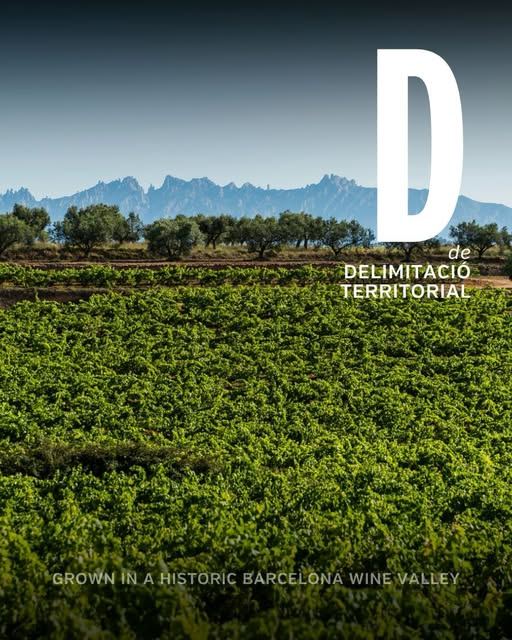
Corpinnat: Què és?
Corpinnat is
- a brand / producer group
- for sparkling wines
- made in the heart (cor) of the Penedès
- from 100% organic grapes
- harvested by hand
- entirely vinified on premises of the winery.
- harvested by hand
- from 100% organic grapes
- made in the heart (cor) of the Penedès
- for sparkling wines
Brand
Unlike D.O. Cava, Champagne AOC, Franciacorta DOCG or TrentoDOC, Corpinnat ® is not a European geographical indication. It is a EU brand and producer group (as such resembles the German VDP.Sekt.Statut, for example).

Origins
Penedès, Catalunya is the region where the first sparkling wines were made in Spain (Raventós i Blanc, Sant Sadurní d’Anoia 1872). This is also the region where most Cava is produced (90%). However, for historical and legal reasons, Cava is also produced in the Ebro Valley (Rioja), Valencia, and Extremadura.
Corpinnat comes from Penedès.
Corpinnat deriva de tres paraules diferents que convergeixen en un sol concepte. Cor (fent referència al centre del territori) + Pinnae (el llatinisme que dona origen al mot Penedès) + nat (nascut a). Fusionades aquestes tres paraules, en resulta un missatge molt clar: nascut al cor del Penedès.
The territory covers 22.966 hectares. vineyard, of which currently 1126 hectares (5%) are used for the production of Corpinnat sparkling wines.


You can zoom in down to the vineyard level on the corpinanat.com website.

Historical Varieties
Like Cava, Corpinnat is made from traditional/indigenous/historical Penedès varieties macabeo (viura), xarel-lo, and parellada (classic blend) but other, preferably local varieties, are used as well: subirat (malvasía), sumoll, xarel-lo vermell, garnacha, and monstrall.
Whereas Cava allows single variety chardonnay (Codorníu Grand Plus Ultra Chardonnay Brut Nature) or pinot noir (Anna De Codorníu Blanc De Noirs), Corpinnat defines a maximum for “non-historical” varieties (chardonnay, pinot noir, trepat): 10% and aims to further reduce this.
Blends differ significantly. Torelló 225 Brut Nature 2018, for example, uses 57% xarel.lo, 23% macabeo and 20% parellada, Júlia Bernet Barraca dels Coscons 2019 100% xarel-lo, and Recaredo Reserva Paricular 2014 55% xarel·lo and 45% macabeo. In general, the longer the ageing, the more xarel-lo is used and less parellada, which adds a lighter, fruitier note (not unlike pinot meunier).
100% Organic
Like the Clàssic Penedès sparkling wines and Guarda Superior Cavas (Reserva, Gran Reserva, Paraje Calificado), Corpinnat is made using traditional farming methods and 100% organic treatments.
For the DO Cava and DO Penedès these represent premium offerings at smaller volumes; 100% organic does not apply to the regular Cava de Guarda (85% of production) or DO Penedès wines in general (95% is non-sparkling).
Champagne aims to be 100% organic by 2030 (according to its own framework), Franciacorta, and other PDO’s that focus on value rather than volume have similar goals.
Hand-harvested
Like Champagne, Franciacorta, Prosecco Superiore DOCG and Guarda Superior Cavas, Corpinnat is entirely hand-harvested.
This is not the case for high volume sparkling wines like Cava, Prosecco, or Sekt where 85% or more is machine-harvested.

On-Premises
As remarked, the grapes and base wine used to produce Cava may come from elsewhere. The grapes used to make Corpinnat must come from vineyards either owned by the winery or under long-term lease. The winemaker must be winegrower and the wine cannot be made in cellars shared with other winemakers.
In 2021, the D.O. Cava introduced the Elaborador Integral stamp, which has a similar requirements (to date, 17 of the 200+ Cava producers qualify).

Aging
The minimal aging requirement for Corpinnat is 18 months (similar to Franciacorta and to Cava Reserva). In addition, Corpinnat producers also offer a Reserva (30 months) and a Cuvée (60 months). This is similar to vintage Champagne and Franciacorta Millesmato and Riserva.

Almost all Corpinnat are single vintage sparkling wines with the year on the label. Here Corpinnat differs from Champagne where most (80-90%) wines are multi-vintage to mitigate between good and bad harvests. The Penedès ciimate is much milder.

In 2024, the Corpinnat wineries sold 2.2 million bottles.
The total sparking wine market is estimated at 2.500 million bottles. Champagne sold 271 million bottles (44% in France), Cava 218 million, Prosecco 660 million (DOCG 100 million), Sekt 370 million, and Franciacorta DOCG 19 million.
Socials
Producers
Corpinnat continues to grow: Juvé & Camps join the collective brand, reaching 22 member wineries – Apr 2026
The six founding wineries from 2018 are Gramona, Llopart, Nadal, Recaredo, Sabaté i Coca, and Torelló. Huguet de Can Feixes, Júlia Bernet and Mas Candi joined soon after, followed by Descregut (2020), Pardas (2021), Bufadors (2023), Cisteller (2024), Viader, Mas de la Basserola, Celler Kripta, Demost, Mas Bertran, AT Roca (2025), Celler Mir and Torné & Bel (2026).
Growth has continued through 2026. On 1 April 2026, Juvé & Camps — one of the historic houses of Spanish sparkling wine, founded in 1796 and producing sparkling wines since 1921 — left the Cava DO to join Corpinnat as its 22nd member, the most significant single accession in the brand’s history. On 1 July 2026, Mas Vilella of La Bisbal del Penedès became the 23rd member and the first winery to bring Corpinnat into the Baix Penedès. The collective now represents 23 wineries with a combined production of more than six million bottles — a volume roughly doubled by the arrival of Juvé & Camps alone.
Locations
See the map on Google Earth for the winery locations
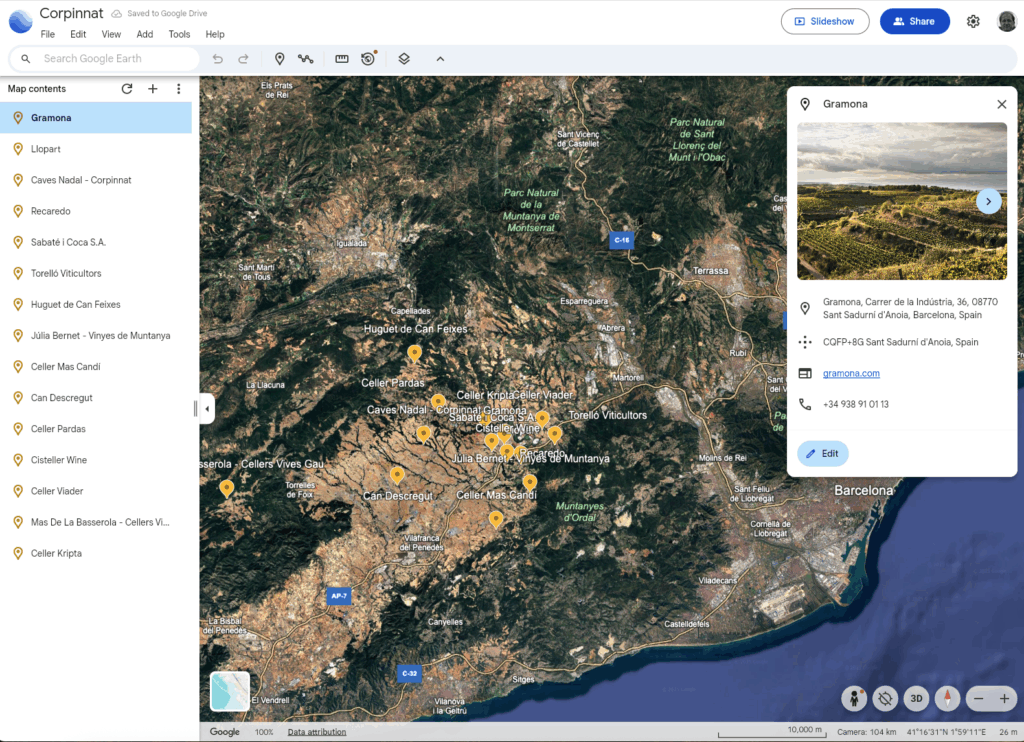
Gramona
Jaume Gramona – family-owned (Battle-Gramona since 1850); sparkling wine since 1921; sourced from their own vineyards (65 hectares) and those from the Alianzas por la Tierra winegrowers association (13 members, 421 hectares, including Gramona).
Wines
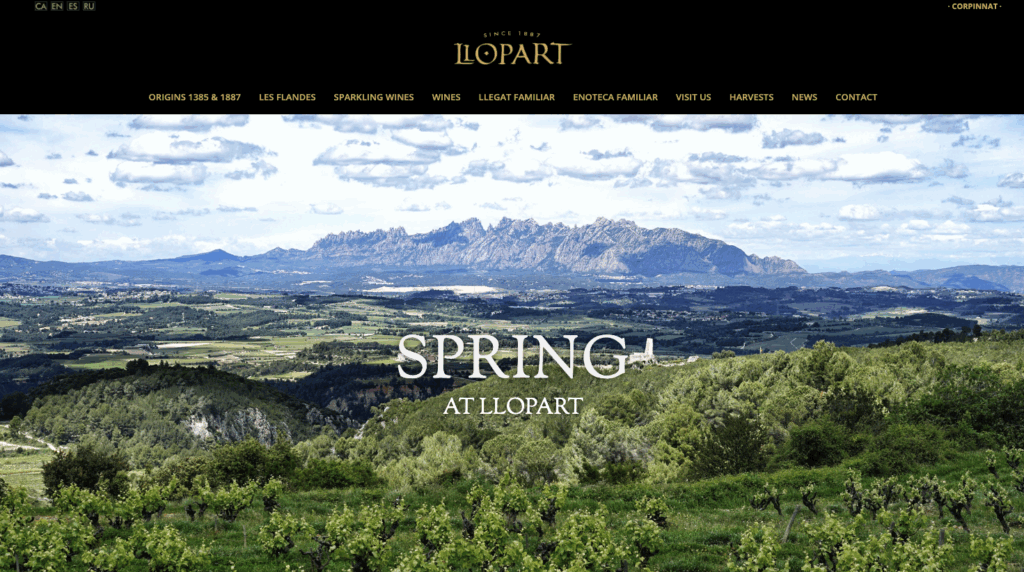
Llopart
Can Llopart de Subirats, family-owned (since 1385); sparkling wine since 1887; 102 hectares; produces both still and sparkling.
Wines
Nadal
Nadal family-owned (since 1510); sparkling wine since 1943; 100 hectares; produces both still and sparkling
Wines

Recaredo
Ton Mata – family-owned since 1924; 100 hectares; produces both still (Celler Credo) and sparkling
Wines
Sabaté i Coca
Marcel Sabaté – family-owned since 1855; Castellroig winery; 40 hectares.
Wines

Torelló
Torelló family-owned (1395); winemaking since 1951, organic since 2014; 135 hectares.
Wines

Huguet de Can Feixes
Joan Huguet – family-owned winery; produces both still and sparkling; joined Corpinnat in 2018; 80 ha, 250.000 bottles.
Wines
Júlia Bernet
Xavier Bernet – family-owned winery since 2003; produces both still and sparkling; joined Corpinnat in 2018; 7 ha, 40.000 bottles.
Wines
Mas Candi
Ramon Jané and Mercè Cuscó – family-owned winery since 2006; half of the production is sparkling; joined Corpinnat in 2018; 20 ha, 60.000 bottles.
Wines
Can Descregut
Arantxa de Cara and Marc Milà – family-owned winery since 1992 (organic since 2005); half of the production is sparkling; joined Corpinnat in 2020; 25 ha, 60.000 bottles.
Wines
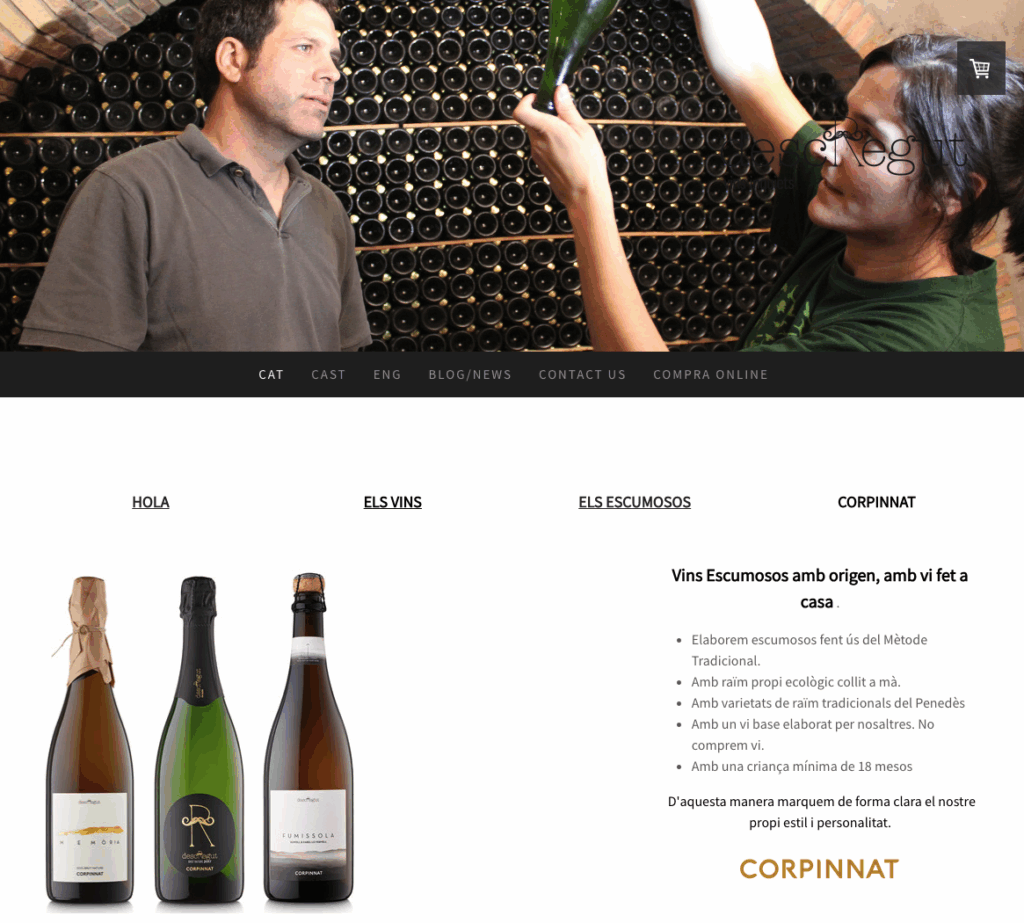
Pardas
Jordi Arnan and Ramon Parera – family-owned since 1996; produces both still and sparkling; joined Corpinat in 2021; 30 ha.
Wines
Bufadors
Personal project from Ton Mata (Recaredo) and partner Encarna Castillo; joined Corpinnat in 2023.
Cisteller
Jessica Madigan & Sergi Canals – family-owned since 2022; produces both still and sparkling; joined Corpinnat November 2024; 12 ha.
Wines
Viader
Eduard Viader – family-owned since 2010 (Muscàndia); joined in March 2025 (Mar 2025); 10 ha; 50.000 bottles.
Wines

Mas de la Basserola
Martina Muts and Guillem Vives – family-owned since 1869; producing cava since 1987; joined Corpinnat in April 2025; 6 ha.
Wines
Celler Kripta
Agustí Torelló and Carmen Sibill – family-owned; producing cava since 1978. Joined CORPINNAT in August 2025.
Celler Demost
Joined CORPINNAT in September 2025.
Mas Bertran
Family winery, founded 2005. Joined CORPINNAT in October 2025.
AT Roca
Family winery, founded 2013. Joined CORPINNAT in October 2025.
Celler Mir
Joined CORPINNAT in January 2026.
- Corpinnat creix: Celler Mir i Torné & Bel s’incorporen a la marca col·lectiva, que suma 21 cellers
- cellermir.com
Torné & Bel
Joined CORPINNAT in January 2026.
- Corpinnat creix: Celler Mir i Torné & Bel s’incorporen a la marca col·lectiva, que suma 21 cellers
- tornebel.com
Juvé & Camps
Meritxell Juvé – Sant Sadurní d’Anoia; a winegrowing family since 1796, producing sparkling wines since 1921, and long the reference name for Gran Reserva cava. The house farms 252 hectares of certified-organic estate vineyards and is known for its Brut Nature style and long lees ageing; flagship cuvées include Reserva de la Família and La Capella. Its departure from the Cava DO for Corpinnat, under fourth-generation CEO Meritxell Juvé, marks the largest producer yet to make the move. Joined Corpinnat in April 2026.
Mas Vilella
Albert Jané – La Bisbal del Penedès; the first Corpinnat member in the Baix Penedès. Mas Vilella is a 16th-century masia where Jané — known for Acústic Celler (DO Montsant) and Ritme Celler (DOQ Priorat) — returned to the vineyards his parents planted in 1984. Production is small (around 12,000 bottles of sparkling wine initially): a Sumoll-based rosé and a Xarel·lo-led white, with a varietal Malvasia de Sitges planned. Unusually, Mas Vilella sought Corpinnat membership from the start of its sparkling production rather than converting from another designation. Joined Corpinnat in July 2026.
Media
- Corpinnat nears two dozen with Mas Vilella – hudin.com (2026)
- Juvé & Camps joins Corpinnat – The Drinks Business (2026)
- Introducing Corpinnat – a complex tale – by Ferran Centelles, jancisrobinson.com (January, 2020)
- El cava, peleas entre familias y su lucha por convertirse en un gran vino – by Jesús Rodríguez, El País (Jul 2019)
España factura unos 1.100 millones de euros elaborando 250 millones de botellas de espumoso; Champaña, 5.000 millones con 300 millones de botellas. No es una gran diferencia en volumen, pero la del valor es sustancial
→ Also on tessender.com: Wine Region Notes: Basque Country
Import Nederland
- Décantalo
- Gramona
- Llopart
- Nadal
- Recaredo
- Sabaté i Coca
- Torelló
- Huguet de Can Feixes
- Júlia Bernet
- Mas Candi
- Can Descregut
- Pardas
- Bufadors
- Cisteller
- Viader
- Mas de la Basserola

One Comment
Comments are closed.